English
  русский
 Content
- 1 Steel Casting Parts: A Practical Guide to Materials, Methods and Quality Control
- 2 What Are the Main Components of a Metal Casting?
- 3 What Are the Four Types of Metal Casting?
- 4 What Metal Is Most Frequently Used in the Casting Process?
- 5 How to Cast Steel Parts: The Process Step by Step
- 5.1 Pattern and Process Design
- 5.2 Mold and Core Making
- 5.3 Melting and Chemistry Control
- 5.4 Deoxidation and Ladle Treatment
- 5.5 Pouring
- 5.6 Cooling and Shakeout
- 5.7 Heat Treatment
- 5.8 Finishing and Inspection
- 5.9 How Carbon Content Changes Strength
- 5.10 Indicative Tensile Strength vs. Carbon Content (Normalized)
- 6 How to Tell Steel Parts vs Cast Iron
- 7 Is Investment Casting Used for Making Steel Parts?
- 8 Common Steel Grades Used in Steel Casting Parts
- 9 Defects in Steel Castings and How They Are Prevented
- 10 What Are 5 Safety Rules for Casting?
- 11 Quality Control for Steel Casting Parts
- 12 Custom Steel Casting Parts Built to Your Drawing
- 13 Frequently Asked Questions About Steel Casting Parts
Steel Casting Parts: A Practical Guide to Materials, Methods and Quality Control
Steel Casting Parts sit inside crushers, mining machines, valves, pumps, rail equipment and construction machinery, where a part must carry heavy load, absorb impact and resist wear at the same time. People who search for answers such as "what are the main components of a metal casting?" or "how to cast steel parts" usually want a clear picture of what happens between a drawing and a finished casting. This guide answers the most common questions in plain, technical language, with parameters you can compare and checks you can apply on the shop floor.
What Are the Main Components of a Metal Casting?
A metal casting is more than the final shape you hold in your hand. Every sound casting starts as a system of features that guide liquid metal into a cavity, feed it while it freezes and let trapped gas escape. When people ask about the main components of a metal casting, the answer includes both the permanent geometry of the part and the temporary features that are cut away before delivery. Understanding this system makes it much easier to judge why one Steel Casting Parts design is trouble-free and another keeps producing shrinkage defects.
Mold Cavity
The hollow space that reproduces the outer geometry of the part. Its surface finish, strength and permeability decide how clean the casting skin will be.
Core
A separate sand or ceramic body that forms holes, pockets and internal passages. Cores must withstand steel pressure and still collapse easily after pouring.
Gating System
Pouring cup, sprue, runner and ingates. A well-proportioned gating system fills the mold calmly, without oxide folds or sand erosion.
Riser
A reservoir of hot steel placed over heavy sections. It supplies liquid metal while the casting contracts, moving shrinkage out of the part and into the riser.
Chill
A metal insert that pulls heat out of a thick zone faster, creating directional solidification toward the riser.
Vents
Small channels and permeable sand that release air and binder gas, preventing blowholes and misruns in Steel Casting Parts.
Steel is demanding because it shrinks more than cast iron during freezing. The riser and chill layout therefore carries more weight in steel foundry practice than in almost any other casting family.
What Are the Four Types of Metal Casting?
Foundries usually group the process into four families, and each one fits a different metal, size and production pattern. Only two of them are realistic routes for Steel Casting Parts, which is why the comparison below is worth reading before you choose a process.
| Casting Type | Typical Metals | Weight Range | Surface Finish (Ra) | Used for Steel? |
|---|---|---|---|---|
| Sand Casting | Steel, cast iron, bronze, aluminum | 0.5 kg to 30+ tons | 12.5–25 μm | Yes, the main route |
| Investment Casting | Carbon steel, alloy steel, stainless steel | 5 g to about 100 kg | 1.6–6.3 μm | Yes, for precise parts |
| Die Casting | Aluminum, zinc, magnesium | 10 g to about 50 kg | 0.8–3.2 μm | No, steel melts too hot for the dies |
| Permanent Mold Casting | Aluminum, copper alloys, some iron | 0.1 kg to about 100 kg | 3.2–12.5 μm | Rarely |
Die casting and permanent mold casting rely on reusable metal tooling. Liquid steel at roughly 1,560°C would attack that tooling within a few shots, so steel producers favor expendable molds made of bonded sand or ceramic shell.
What Metal Is Most Frequently Used in the Casting Process?
Gray iron and ductile iron account for the largest tonnage of castings worldwide, so cast iron is the answer to both "what metal is most frequently used in the casting process" and "what is the most common casting material". Iron has a low melting point, flows well into thin sections and costs less to melt. Aluminum follows for lightweight parts, while steel holds a smaller share by tonnage but a much larger share in heavy-duty service.
The easiest metal to cast is usually aluminum or gray iron. Aluminum pours at a low temperature, and gray iron expands slightly during graphite formation, which offsets part of its shrinkage. Steel is the harder case: it needs higher superheat, stronger molds and careful feeding. That difficulty is exactly why well-made Steel Casting Parts reflect real foundry skill.
Typical Pouring Temperature by Casting Metal
How to Cast Steel Parts: The Process Step by Step
Learning how to cast steel parts means following a chain of controlled steps. A weakness at any link, whether in melting, molding or heat treatment, shows up later as a crack, a hard spot or a leak. The sequence below reflects normal practice for sand-molded Steel Casting Parts.
Pattern and Process Design
Engineers add shrinkage allowance, machining stock and draft angles, then simulate filling and solidification to place gates, risers and chills before any metal is melted.
Mold and Core Making
Chemically bonded sand is compacted around the pattern. Cores are inserted, the mold halves are closed and the surface is coated with a refractory wash that resists burn-on.
Melting and Chemistry Control
An induction or electric arc furnace melts selected scrap and alloys. Spectrometer readings confirm carbon, manganese, silicon, chromium, nickel and molybdenum before tapping.
Deoxidation and Ladle Treatment
Aluminum or calcium compounds remove dissolved oxygen so that gas holes and inclusions are held down. Temperature is verified with an immersion probe.
Pouring
Steel is poured through a preheated ladle at a steady rate. Pouring time is matched to wall thickness, because a slow fill can cause cold shuts and a fast fill can wash the sand.
Cooling and Shakeout
The casting stays in the mold until it falls below a safe temperature. Removing it too early risks distortion and surface cracking.
Heat Treatment
Normalizing, annealing, or quenching and tempering refines grain size and relieves casting stress, bringing the part to the required hardness and toughness.
Finishing and Inspection
Gates and risers are cut off, surfaces are ground and shot blasted, and every critical dimension and test result is recorded against the drawing.
How Carbon Content Changes Strength
Carbon is the single most influential element in plain carbon cast steel. As carbon rises, strength and hardness climb, while ductility and weldability fall. The chart below shows indicative tensile strength of normalized carbon steel castings, which helps explain why wear-facing parts and structural parts rarely use the same grade.
Indicative Tensile Strength vs. Carbon Content (Normalized)
Values are typical for normalized plain carbon cast steel and shift with section size, alloying and heat treatment.
How to Tell Steel Parts vs Cast Iron
Steel and cast iron can look nearly identical after shot blasting, and mixed-up materials cause costly failures. Anyone asking how to tell steel parts vs cast iron should combine several quick checks rather than trusting a single one. The difference starts with carbon: steel stays below about 2%, while cast iron sits above it, and that gap changes structure, strength and behavior under load.
| Property | Steel Casting Parts | Gray Cast Iron | Ductile Iron |
|---|---|---|---|
| Carbon content | 0.1–1.5% | 2.5–4.0% | 3.2–3.8% |
| Melting range | 1,450–1,520°C | 1,150–1,250°C | 1,150–1,250°C |
| Tensile strength | 400–1,000 MPa | 150–350 MPa | 400–900 MPa |
| Elongation | 10–25% | Below 1% | 2–18% |
| Impact toughness | High | Low | Medium to high |
| Weldability | Good with preheat | Poor | Limited |
| Vibration damping | Moderate | Excellent | Good |
Spark Test
Touch the part to a grinding wheel. Steel throws long, bright, branching sparks with bursts at the tips. Gray iron gives short, dull red streaks with few branches.
Fracture Appearance
A fresh break in steel shows a bright, fibrous grain. Gray iron breaks to a dark gray, crystalline face because graphite flakes run through the metal.
Chip Test
Drilling or filing steel produces long, curled chips. Gray iron produces short, powdery chips and leaves a gray dust on the tool.
Ring Test
Suspend a small piece and tap it. Steel rings clearly and for longer, while gray iron gives a dull, short thud.
When a part carries load or will be welded, confirm the result with a portable spectrometer or a laboratory chemical analysis. Visual and sound tests narrow the field, but only chemistry settles the question.
Is Investment Casting Used for Making Steel Parts?
Yes. Investment casting, also called lost-wax casting, is widely used for Steel Casting Parts that need fine detail, thin walls and tight tolerances. Wax patterns are coated with ceramic slurry and sand, the wax is melted out, and the fired ceramic shell receives the molten steel. Because the shell is rigid and smooth, the casting emerges close to its final dimensions.
The process handles carbon steel, low-alloy steel, stainless steel, heat-resistant steel and tool steel. Typical products include valve bodies, pump impellers, pipe fittings, gear housings and machine linkages. For heavy wear liners and large structural castings, sand casting remains the more practical route, because shell size and cost limit investment casting at higher weights.
| Parameter | Investment Casting | Sand Casting |
|---|---|---|
| Dimensional tolerance | CT4–CT7 | CT8–CT12 |
| Surface roughness (Ra) | 1.6–6.3 μm | 12.5–25 μm |
| Minimum wall thickness | 1.5–3 mm | 5–8 mm |
| Usual weight range | 5 g to about 100 kg | 0.5 kg to 30+ tons |
| Machining allowance | 0.3–1.5 mm | 3–10 mm |
| Tooling cost | Medium (wax injection tool) | Low (wood or resin pattern) |
| Best suited for | Complex, precise, smaller parts | Heavy, simple or impact-loaded parts |
Common Steel Grades Used in Steel Casting Parts
Choosing the right grade matters as much as choosing the right process. The list below covers frequently specified cast steels and the service conditions they are normally selected for.
| Grade Family | Typical Designation | Key Property | Typical Application |
|---|---|---|---|
| Low carbon steel | ASTM A216 WCB, ZG230-450 | Good weldability, moderate strength | Valve bodies, pump casings, frames |
| Medium carbon steel | ZG270-500, ZG310-570 | Higher strength and hardness | Gears, wheels, couplings |
| Low-alloy steel | ZG35CrMo, ZG40Mn2 | Strength after quench and temper | Heavy shafts, crusher frames, hubs |
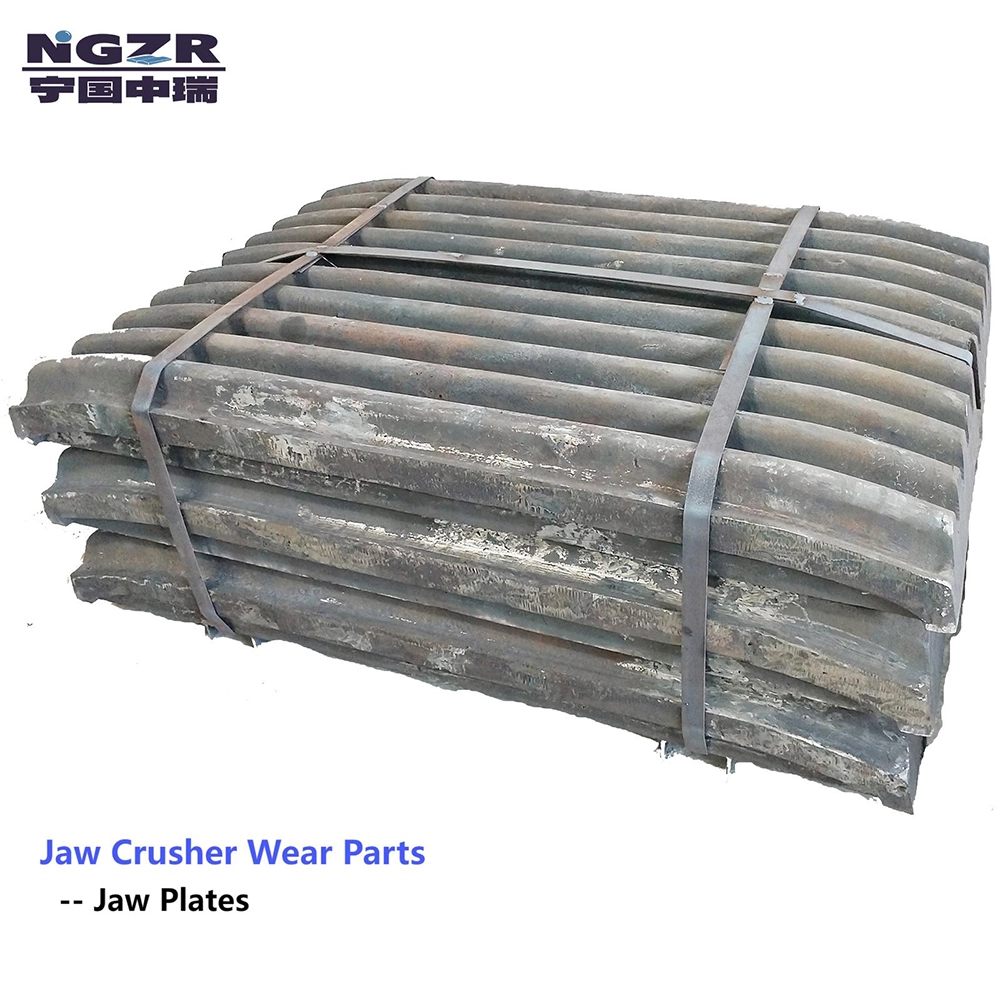
| High manganese steel | Mn13Cr2, Mn18Cr2 | Work hardens under impact | Jaw plates, cone liners, blow bars |
| Chromium alloy steel | Cr26 type, 20Cr–30Cr | Abrasion and heat resistance | Mill liners, slurry pump parts |
| Stainless steel | CF8 (304 type), CF8M (316 type) | Corrosion resistance | Food, chemical and marine fittings |
Why High Manganese Steel Stands Out in Crushing Service
Austenitic manganese steel stays tough under impact and gains surface hardness as hammering deforms it. In a jaw crusher or cone crusher, the working face can rise from about 200 HB to well above 450 HB during service, while the core remains ductile. This behavior makes it a leading choice for Steel Casting Parts that face repeated heavy blows from rock.
Defects in Steel Castings and How They Are Prevented
Every foundry fights the same short list of defects. Knowing their causes helps you read an inspection report and ask the right questions about a casting.
| Defect | Main Cause | Preventive Measure |
|---|---|---|
| Shrinkage cavity | Inadequate feeding of heavy sections | Larger risers, chills, exothermic sleeves |
| Gas porosity | Moisture, high dissolved gas, poor venting | Dry molds, proper deoxidation, extra vents |
| Hot tear | Restrained contraction at high temperature | Fillets, uniform wall thickness, softer cores |
| Cold shut | Low pouring temperature or slow fill | Higher superheat, faster and smoother filling |
| Sand inclusion | Mold erosion or loose sand | Stronger molds, better gating, mold wash |
| Burn-on | Metal penetrating the sand surface | Refractory coating, correct sand grain size |
What Are 5 Safety Rules for Casting?
Molten steel is among the most hazardous materials in any workshop. A single drop of water or one skipped check can lead to a serious accident, so the following five rules are treated as non-negotiable in a responsible foundry.
Wear Full Protective Gear
Heat-resistant coveralls, face shield, leather gloves and metatarsal safety boots are required wherever metal is poured or handled.
Keep Everything Dry
Ladles, tools, molds and charge materials must be preheated and moisture-free. Trapped water turns to steam explosively on contact with liquid steel.
Control Fumes and Dust
Extraction systems and respiratory protection reduce exposure to metal fumes, silica dust and binder gases during melting, pouring and cleaning.
Plan Lifting and Pouring Routes
Ladle paths are marked, crane hooks are inspected, and only trained crew members stay inside the pouring zone.
Inspect Equipment and Prepare for Emergencies
Furnace linings, ladle refractories and lifting gear are checked on a schedule, and spill containment and first-aid stations stay ready.
Quality Control for Steel Casting Parts
Consistent quality is built from documented checks at each stage rather than a single final inspection. A complete control plan for Steel Casting Parts normally combines chemistry, mechanical testing, non-destructive testing and dimensional measurement.
Chemical Analysis
Optical emission spectrometry on every heat verifies carbon, manganese, silicon, phosphorus, sulfur and alloying elements against the grade requirement.
Mechanical Testing
Test bars cast with the part are used for tensile, yield, elongation, hardness and Charpy impact tests after the same heat treatment cycle.
Non-Destructive Testing
Magnetic particle testing finds surface cracks, ultrasonic testing detects internal voids, and radiographic testing documents critical sections.
Dimensional Inspection
Coordinate measuring machines and gauges confirm wall thickness, bore positions and flatness against the drawing tolerances.
Typical Inspection Coverage by Test Method
Custom Steel Casting Parts Built to Your Drawing
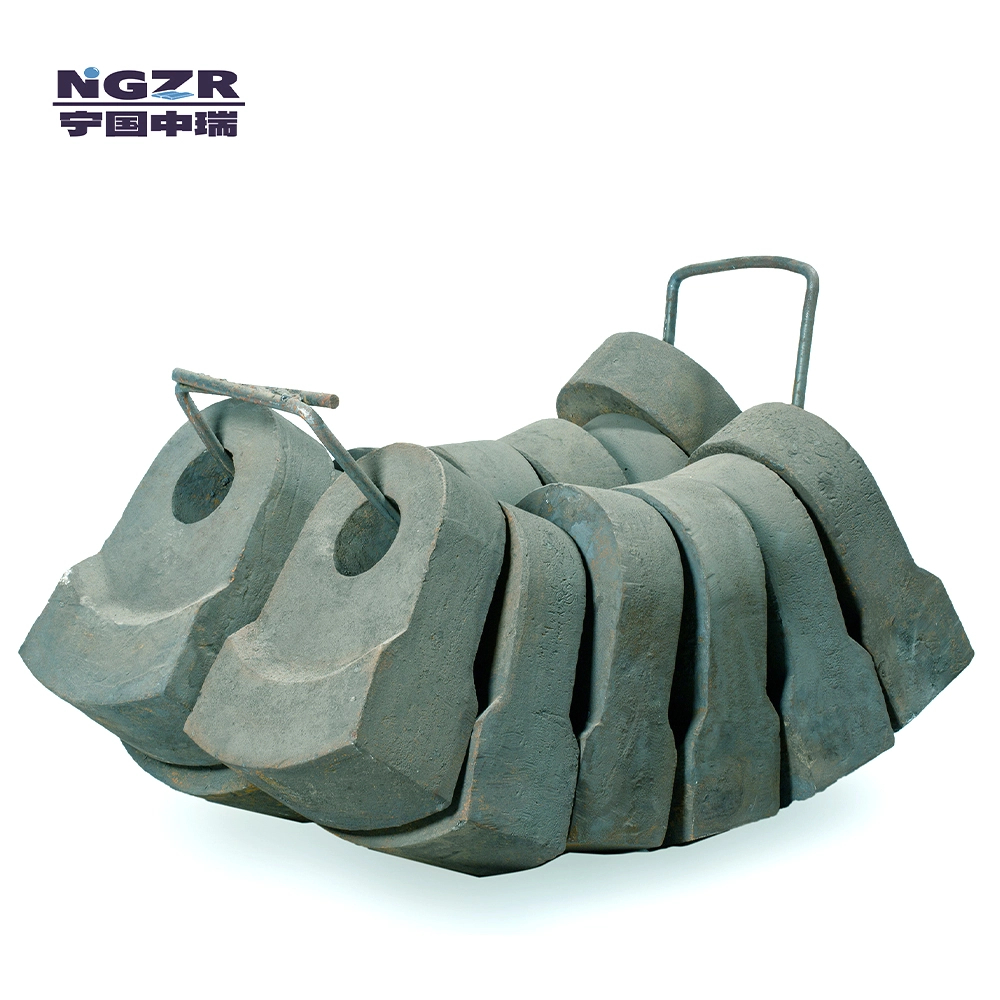
Our foundry produces Steel Casting Parts by sand casting and investment casting, from small precision components to heavy castings weighing several tons. Typical products include cone crusher liners, jaw plates, impact crusher blow bars, mill liners, gear blanks, valve and pump bodies, and wear-resistant structural parts. Each project begins with a drawing and service conditions review, so the grade, process and heat treatment match how the part will actually work.
Material Matching
Carbon, low-alloy, high manganese, chromium alloy and stainless steels are selected against load, impact, abrasion and corrosion conditions.
Process Simulation
Filling and solidification analysis is run before pattern making, which reduces trial castings and shortens development time.
Full Heat Treatment Lines
Furnaces for normalizing, annealing, water toughening and quench-and-temper cycles keep the properties of each batch consistent.
Machining and Finishing
Rough and finish machining, drilling, grinding and surface protection are available so castings can arrive ready to install.
Traceable Records
Heat numbers, chemistry, mechanical results and inspection reports are filed for every casting, with material certificates supplied on request.
Sample and Trial Runs
First-article castings are produced and measured before a full production run begins, so fit and performance can be confirmed early.
Information That Speeds Up a Project
Send a 2D or 3D drawing, the required material or hardness, the working conditions, the expected annual quantity and any special tests. With these five items, an engineer can recommend the most suitable casting process and heat treatment for your Steel Casting Parts without delay.
Frequently Asked Questions About Steel Casting Parts
Can steel be cast as easily as iron?
No. Steel needs a higher pouring temperature and more careful feeding because it contracts more as it freezes. Iron flows more readily and is more forgiving, which is why it is the easiest and most common casting material.
Which process gives the best surface finish for steel?
Investment casting. Its ceramic shell reproduces fine detail and reaches roughness values far below those of sand casting, which reduces machining time.
Is heat treatment always required for Steel Casting Parts?
Almost always. As-cast steel has a coarse structure and residual stress, so normalizing, annealing or quench-and-temper cycles are used to reach the specified strength and toughness.
Can cast steel be welded and repaired?
Yes. Low and medium carbon cast steels weld well with suitable preheat and post-weld stress relief, which makes repair of surface defects and wear zones practical.
How can I confirm a part is steel rather than cast iron?
Combine a spark test, a fracture check and a chip test, then confirm with spectrometer analysis. Chemistry is the only definitive answer.