


 English
  русский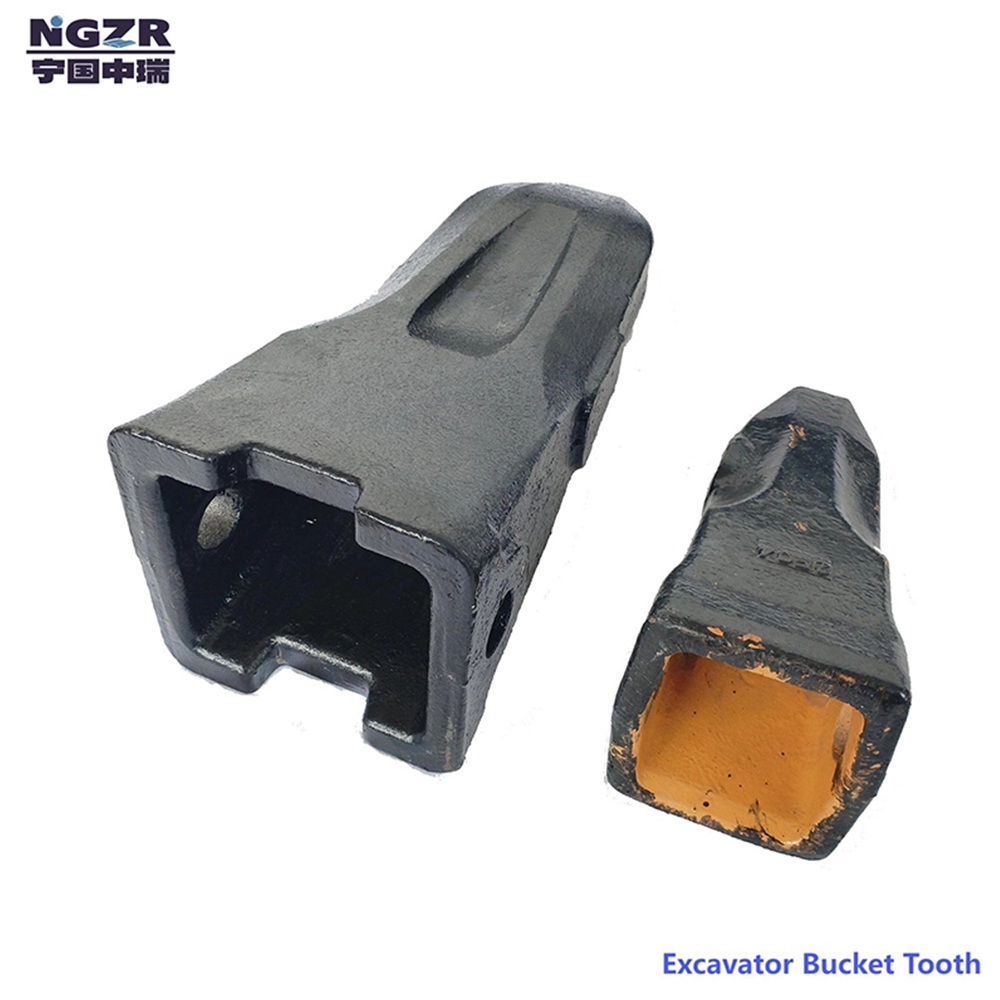








As a Casting Wear Parts for Mining Equipment manufacturer, we produce the cast consumables that sit inside crushing, grinding, classification and loading equipment. Our range covers bucket teeth and adapters, classifier blades and wear plates, together with the crusher hammers, jaw plates, mill liners and grinding media that complete a mineral processing circuit. The foundry is located in Ningguo City, Anhui Province, the capital of China's wear-resistant casting industry, and every order is built from customer drawings, samples, machine data and duty conditions.
Our Mining Wear Range and Where Each Part Fits
Mining wear is rarely a single problem. Impact breakage, sliding abrasion, slurry erosion and fatigue cracking all attack different points of the same line, so we cast the part around the duty it actually sees rather than around a single alloy name. The three families below form the core of this range; crusher wear castings, grinding media and mill liners extend the same material and heat-treatment platform across the rest of the plant.
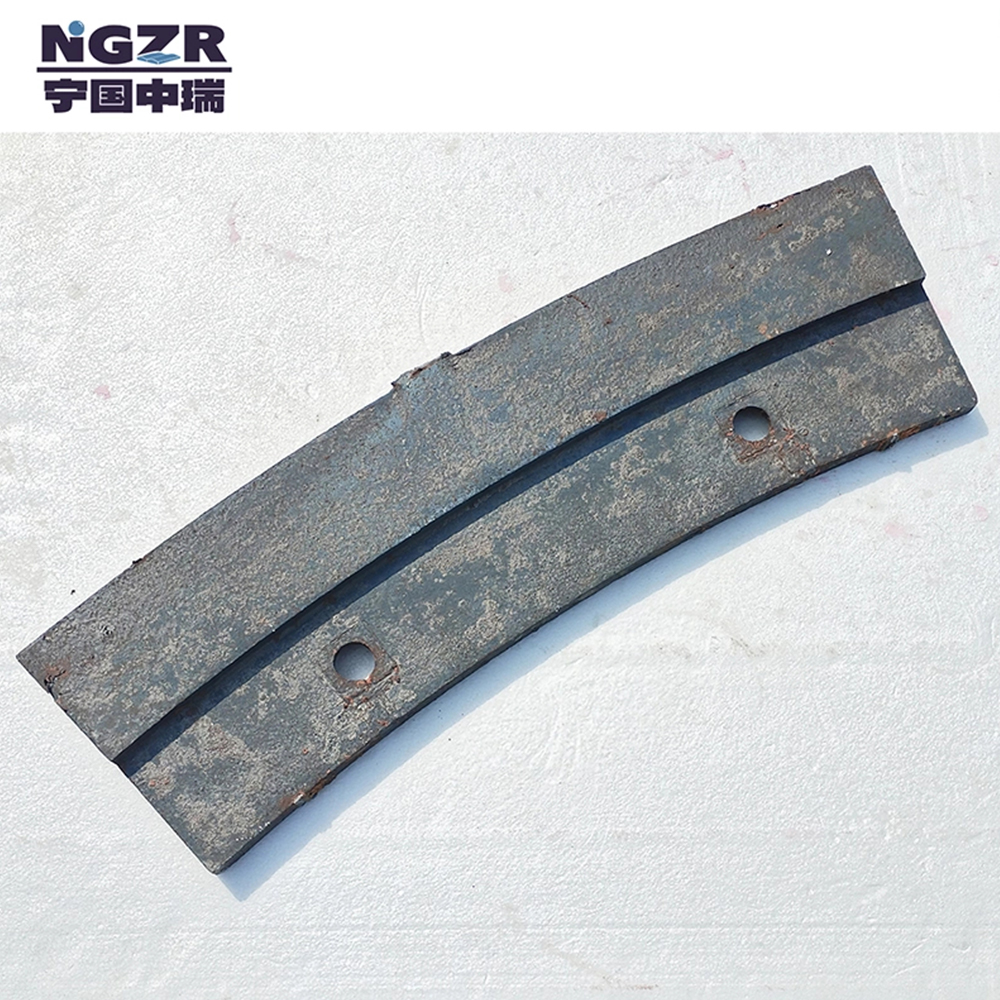
Casting Classifier Wear Parts
Spiral classifier blades, tank wear plates and screw components work in continuous contact with abrasive slurry and fine ore particles. We cast these parts in wear-resistant alloy and high-chromium irons, then match blade pitch, section thickness and the mounting pattern to the classifier diameter and the connection used on the existing screw shaft. See our Casting Classifier Wear Parts range for blade and plate geometries used in mineral processing plants.
Casting Bucket Adapter
The adapter carries digging force from the bucket lip into the tooth, so it has to hold two interfaces at once: the lip mounting and the tooth connection. We cast Casting Bucket Adapter bodies in wear-resistant alloy steel, controlling lip thickness, pin or lock geometry and tooth series so the assembly seats correctly on the machine.
Casting Bucket Tooth
Teeth take the first contact with rock, ore and overburden, and the balance between penetration and wear life changes with the material being dug. Our Casting Bucket Tooth castings are supplied in abrasion-resistant alloy steel in the nose and profile suited to the machine class and digging condition.
Beyond this family, the same melting, moulding and heat-treatment lines produce crusher wear castings such as chromium hammers, jaw plates and cone liners, grinding media including balls, cylpebs and rods, and shell and end-cover liners for ball, SAG and vertical mills. A single project can therefore be sourced as a coordinated wear package instead of a set of unrelated spares.
Range Overview: Application Matching at a Glance
The table below shows how our casting families map to duty points and which inputs drive the configuration for each.
| Product Family | Typical Duty Point | Materials We Cast | Configuration Inputs |
|---|---|---|---|
| Classifier wear parts | Spiral classifier blades, tank plates, screw flights | High-chromium cast iron, wear-resistant alloy steel | Classifier diameter, blade pitch, mounting pattern, slurry solids |
| Bucket adapter | Bucket lip to tooth connection on loaders and excavators | Wear-resistant alloy steel, high manganese steel | Pin or lock system, lip thickness, tooth series, machine class |
| Bucket tooth | Digging edge on excavators, loaders, draglines | Abrasion-resistant alloy cast steel | Machine class, ore hardness and abrasiveness, penetration requirement |
| Crusher wear castings | Primary and secondary crushing: hammers, jaw plates, cone liners | High-chromium cast iron, high manganese steel, bimetallic composite | Feed size, closed-side setting, throughput, chamber profile |
| Grinding media | Ball mills, SAG mills, tower mills | High-chromium and medium-chromium cast alloys | Mill diameter, ore work index, ball charge, target grind size |
| Mill liners | Shell and end-cover protection on ball, SAG and vertical mills | High-chromium cast iron, high manganese steel, medium-chromium alloy steel | Mill diameter and length, liner profile, bolt pattern, throughput |
| Ancillary castings | Flange bases, lock nuts, wear-resistant bolt assemblies | Carbon steel, alloy steel, high manganese steel | Frame interface, thread and tolerance, matched assembly set |
Application Fit in Crushing, Grinding, Classification and Loading
Each duty point rewards a different balance of hardness, toughness and section design. We set that balance with the customer before pattern work begins.
- Primary and secondary crushing – high impact from coarse, blocky feed favours high manganese steel or bimetallic castings that work-harden in service; finer, abrasive feed favours high-chromium irons where sliding wear dominates.
- Grinding circuits – media and liner life interact. Grinding media diameter, charge level and liner profile are considered together so the mill keeps its grinding efficiency as parts wear.
- Classification – blades and tank plates face continuous slurry abrasion; adequate section thickness at the leading edge extends service intervals between shutdowns.
- Loading and digging – adapters, teeth and lip protection are matched as a set so the nose, pin and lock geometry stay compatible through the wear cycle.
- Mixed plants – where a site runs several machine sizes, we group parts by drawing revision and grade so spares stay interchangeable between units.
Materials and Casting Routes We Work With
- High-chromium cast iron – for abrasive, low to moderate impact duty such as classifier blades, hammers and fine-crushing liners.
- Medium-chromium and low-chromium alloy cast iron – a practical balance of wear life and cost for large mill liners and general wear plates.
- High manganese steel – retained for high-impact jaw and cone applications where toughness matters more than maximum hardness.
- Bimetallic composite casting – a wear-resistant working face with a tougher backing, used where a single alloy cannot cover both the abrasion and the impact load.
- Wear-resistant alloy steel – the base for bucket teeth and adapters, where a combination of strength and abrasion resistance is required.
Casting Envelope, Capacity and Configuration Options
Size limits are confirmed against the moulding route rather than assumed, because shell moulding, iron mould sand coating and lost foam each suit different geometries.
- Grinding media from Ф8 mm to Ф150 mm, with small cast balls and cylpebs in the 6–40 mm band and larger balls from 40 mm to 150 mm.
- Large castings up to approximately 5000 × 5000 × 1000 mm with piece weights of up to about 1500 kg on one route, and a second envelope up to approximately 1500 × 1500 × 1200 mm with piece weights up to about 3000 kg.
- Annual capacity of 60,000 tons of cast balls and castings across the foundry.
- Two fully automatic iron mould sand coating lines, four mechanical arm shell moulding machines and one fully automatic lost foam mould production line.
- Custom geometry from drawings or physical samples, including section thickness, ribbing and lifting points for heavy liners and plates.
- Grade, hardness target and, where required, machining or drilling of mounting holes agreed at quotation stage.
Melting Control, Heat Treatment and Inspection
The physical property testing room and the melting shop work as one loop. Chemical composition is checked before and after melting, and any deviation is corrected before pouring rather than after casting.
- Three VIP-1800 series melting furnaces with temperature-controlled melting and constant-temperature pouring, supported by far-infrared temperature measurement of the molten metal.
- A cabinet-type direct-reading spectrometer and a carbon-sulfur analyzer verify the chemical composition of each batch of molten iron before the pour.
- One fully automatic heat treatment quenching and reheat treatment line plus two automatic flipping annealing furnaces, giving controlled quenching and annealing cycles rather than open-air cooling.
- Hardness testing on finished parts, with the reading checked against the grade specified on the drawing.
- Initial visual inspection rejects cracked, porous, slag-bearing, cold-shut or sand-marked castings; accepted semi-finished parts are then polished and prepared for dispatch.
Fit-Up, Installation and Maintenance Planning
Wear parts are replaced during planned shutdowns, so we treat installation fit as part of the specification, not an afterthought.
- Mounting interfaces — hole pitch, slot length, bolt size, pin diameter and lock seat — are taken from drawings or from samples supplied by the customer.
- Teeth, adapters and locking components are supplied as compatible sets so a replacement tooth seats on an existing adapter without field modification.
- Heavy liners and plates can be cast with lifting lugs and location features that suit the handling equipment on site.
- For rotating parts such as grinding media and classifier components, dimensional consistency between batches keeps mill balancing and shaft loading predictable.
- Wear limits can be agreed at order stage so maintenance teams know when a part is due for replacement rather than when it has already failed.
Information We Use to Configure Your Solution
A quotation that can be built without follow-up questions usually starts from the following project data:
- Part drawing or physical sample, including revision number if one exists.
- Equipment make and model, plus the position the part occupies in the machine or circuit.
- Material being handled — ore type, lump size, hardness and abrasiveness.
- Working conditions — throughput, mill or crusher size, slurry density, cycle time.
- Wear history of the current part and the failure mode observed (abrasion, cracking, deformation, breakage).
- Required quantity per order and the expected annual consumption for repeat planning.
- Target grade or hardness if already standardised across the site.
- Delivery destination, packing method and any marking or documentation reference required.
Compliance, Documentation and Order Coordination
Zhongrui holds ISO9001 quality certification, ISO14001 environmental certification and ISO45001 occupational health and safety management certification, together with Safety Production Standardization recognition and utility model patent certificates covering foundry process developments. These systems sit behind the same shop-floor controls described above: composition analysis, temperature control during melting and pouring, controlled heat treatment, and hardness and visual inspection before a casting leaves the factory.
For project work we coordinate pattern or sample approval, casting, heat treatment, finishing and packing as one sequence, and confirm quantity, marking and packing with the receiving site before shipment. Inquiries reach the foundry office in Ningguo City directly, and working-day inquiries are answered within 12 hours.
Frequently Asked Questions
Which mining wear parts do you cast in your own foundry?
We cast the full wear family in Ningguo: classifier wear parts, bucket adapters and bucket teeth in this range, plus crusher hammers, jaw plates, cone and impact liners, grinding media from Ф8 mm to Ф150 mm, and liners for ball, SAG and vertical mills.
How is the material grade chosen for a bucket tooth or classifier blade?
Grade follows the working point. Highly abrasive but low-impact duty such as classifier blades and fine ore handling moves towards high-chromium cast iron, while digging teeth and adapters use wear-resistant alloy steel where strength and abrasion resistance must work together. We confirm the selection against your ore type, machine class and the failure mode of the part being replaced.
Can you produce a part that matches an existing tooth, adapter or liner?
Yes. We work from drawings or physical samples and reproduce the mounting dimensions, section thickness and locking geometry, then cast using the moulding route that suits the shape — shell moulding, iron mould sand coating or lost foam precision casting.
What size castings can you supply?
Grinding media runs from Ф8 mm to Ф150 mm. Larger castings can be produced up to roughly 5000 × 5000 × 1000 mm with piece weights of about 1500 kg on one route, or up to roughly 1500 × 1500 × 1200 mm with piece weights up to about 3000 kg on another. Final limits are confirmed against the actual geometry at quotation.
How is quality checked before the castings are shipped?
Molten iron is analysed before and after melting with a direct-reading spectrometer and a carbon-sulfur analyzer, pouring temperature is measured by far-infrared instrument, heat treatment follows controlled quenching and annealing cycles, and finished parts are hardness tested and visually inspected for cracks, porosity, slag inclusions, sand holes, shrinkage cavities and cold shuts before packing.
Send drawings, machine details and consumption data to our Ningguo office at 412352080@qq.com or +86 13205638142, and we will return a configuration and quotation built around your working point.



