


 English
  русский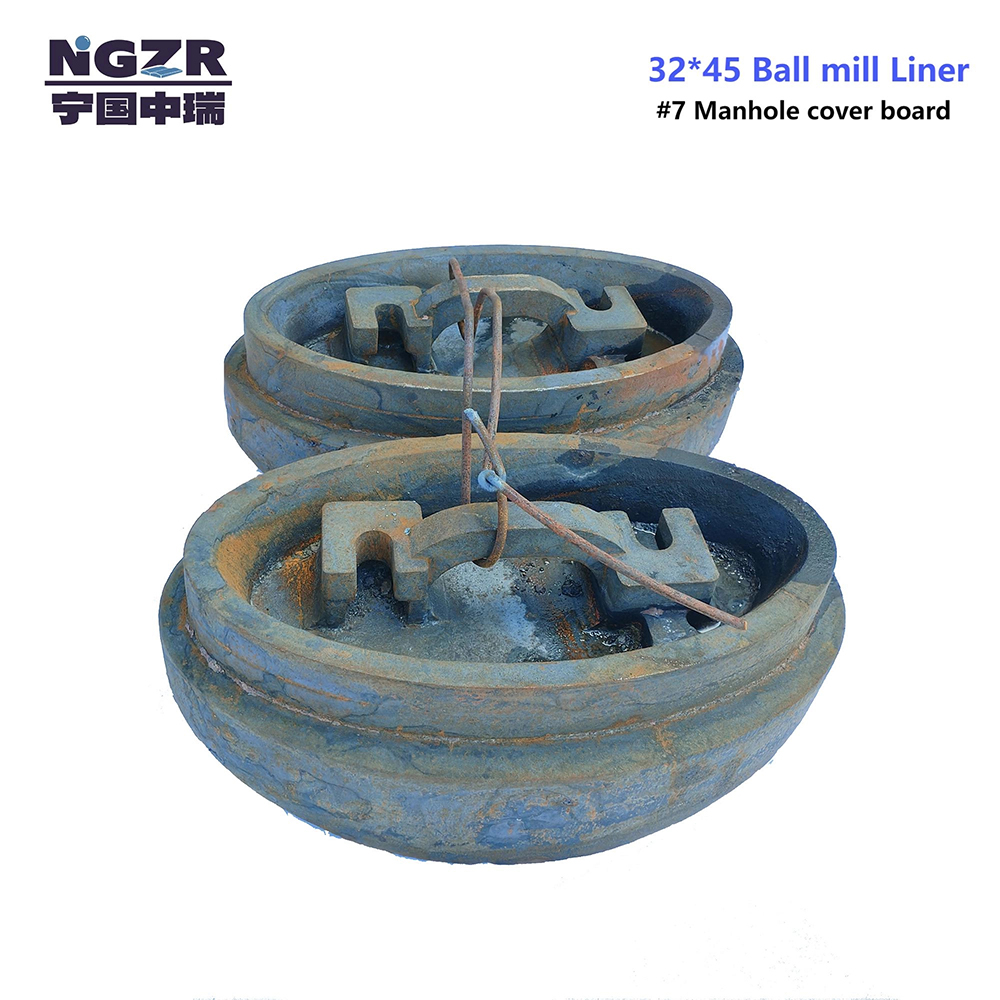








Casting Mill Liners Manufactured in Ningguo
We are a Casting Mill Liner manufacturer producing the shell and end-cover wear plates that protect horizontal ball mills, semi-autogenous mills and vertical mills. Liners are cast in high-chromium cast iron, high manganese steel, medium-chromium alloy steel and Mn-Cr alloy steel, integrally formed by lost foam vacuum precision casting, and finished with automatic closed-loop heat treatment that adjusts the internal metallographic structure to the wear duty.
Our foundry sits in Ningguo City, Anhui Province, the centre of China's wear-resistant casting industry, where alloy control, pattern making and heat treatment are the core disciplines. The same site casts grinding media, crusher wear parts and steel castings, so a complete grinding circuit can be equipped from one production base with consistent metallurgy.
- Two fully automatic iron mould sand coating lines and four robotic shell moulding machines for repeat liner production.
- One fully automatic lost foam production line for integrally formed plates with lifter bars and complex profiles.
- One automatic quenching and reheat treatment line with two automatic flipping annealing furnaces.
- Three VIP-1800 series melting furnaces with temperature-controlled melting and constant-temperature pouring.
- Annual output of 60,000 tons of cast balls and castings, with management systems certified to ISO 9001, ISO 14001 and ISO 45001.
Casting Mill Liner Range
The range is organised by mill type, because a tube mill shell plate, a SAG mill end cover and a vertical mill wear segment carry different loads and are fixed in different ways.
Casting Ball Mill Liner
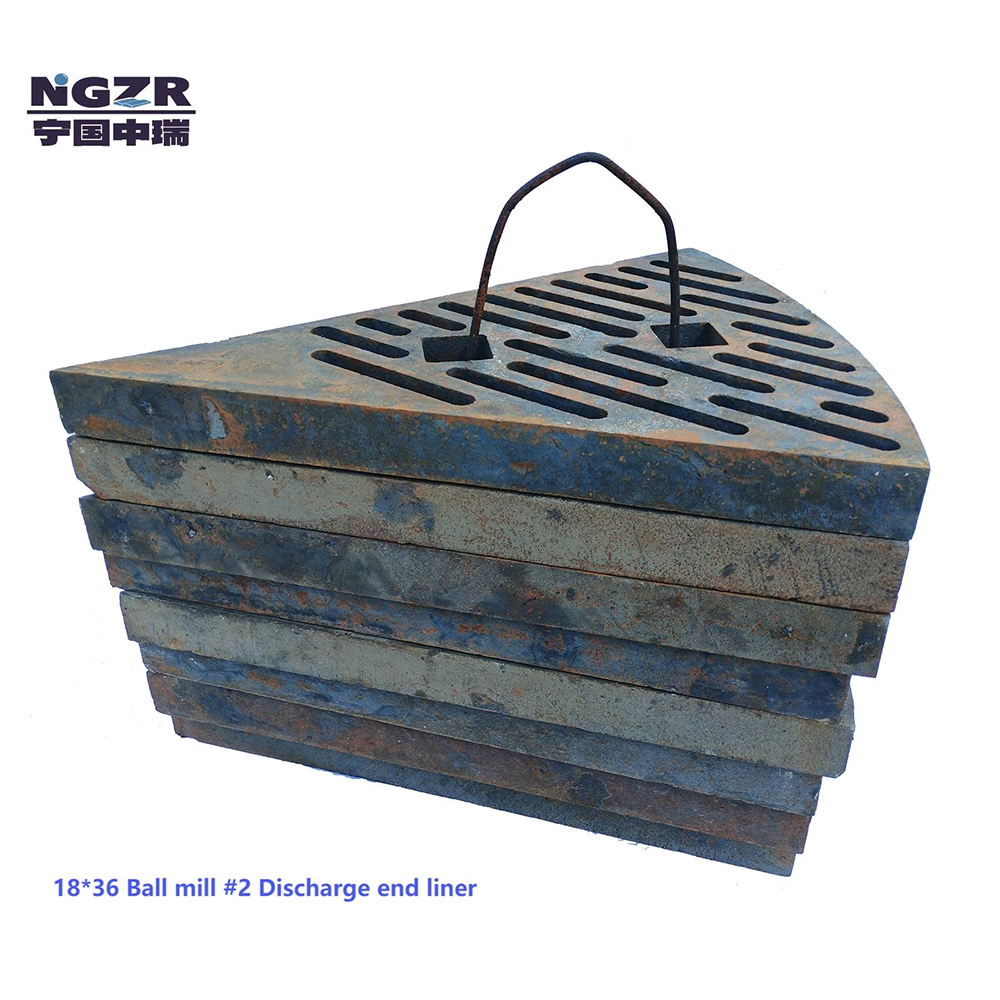
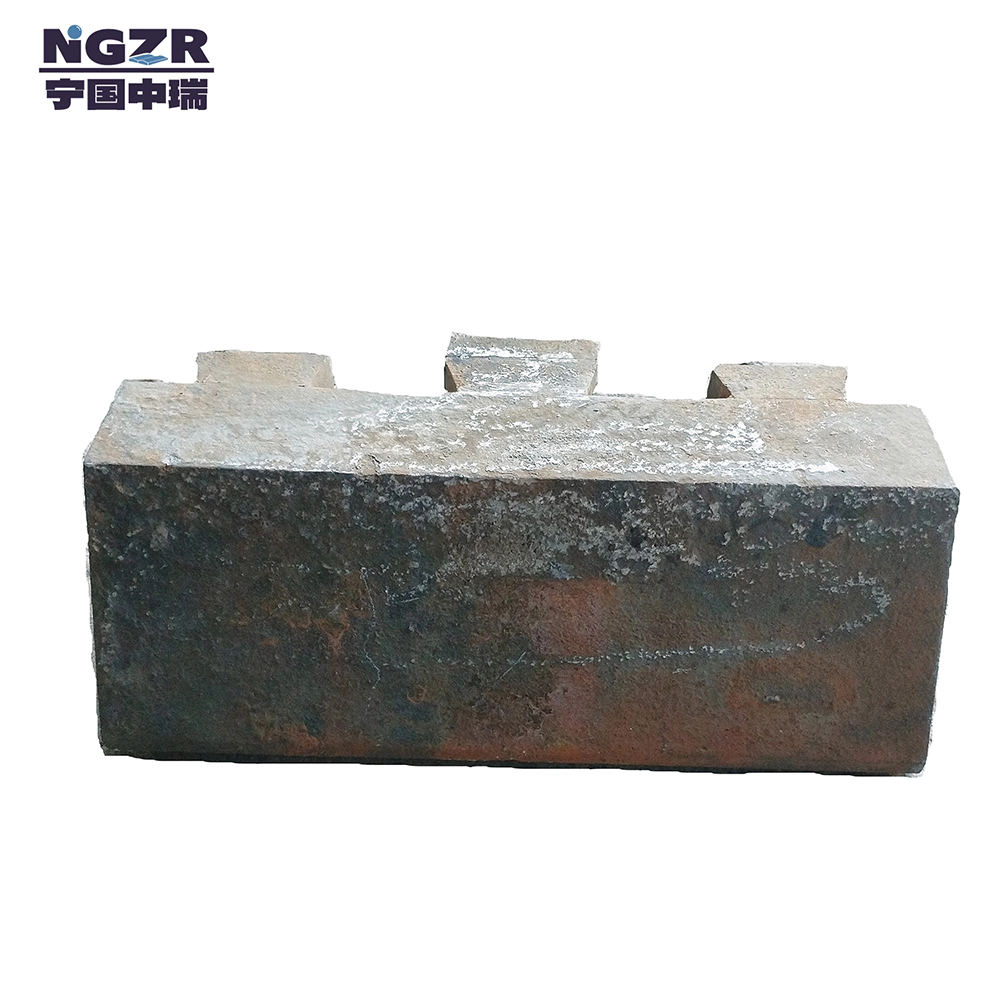
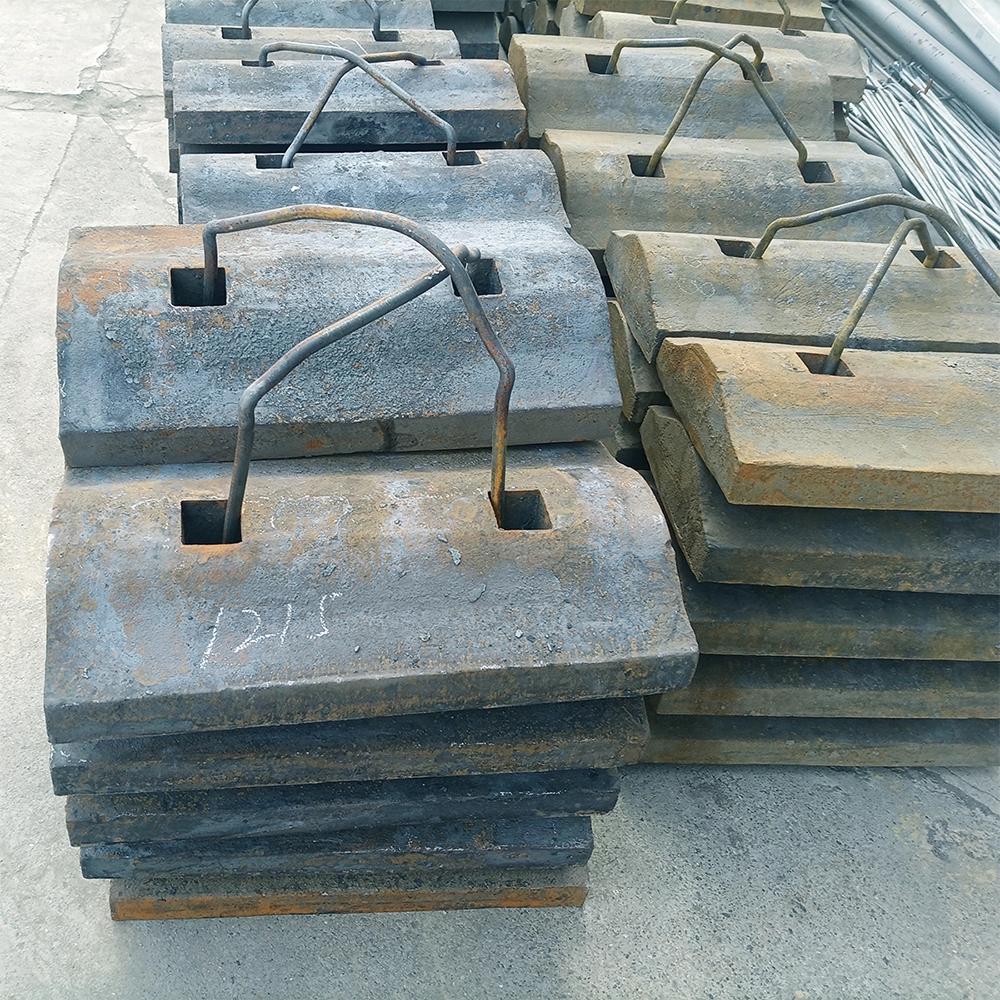
Shell plates, end liners and lifter bars for ball and tube mills in ore dressing, cement, thermal power and chemical plants. These liners are produced in Mn-Cr alloy steel, Mn13Cr2, high manganese alloy and high-chromium cast iron, with supplied examples sized to Φ3.2 × 4.5 m, Φ2.1 × 5.7 m and Φ1.8 × 3.6 m mills.
Casting SAG Mill Liner
Heavy-section shell and end-cover liners for semi-autogenous grinding, where coarse ore and large media generate high impact energy alongside abrasion. These sets are cast in Mn-Cr alloy steel or as a composite rubber and Mn-Cr construction that damps impact and reduces plate mass for the same working wear volume.
Casting Vertical Mill Liner
Table liners, roller-path segments and body wear plates for vertical mills in raw meal, cement and slag grinding, where sliding abrasion dominates and the material is warmer and drier than in a wet circuit. High-chromium cast iron and alloy steel grades are selected for abrasion resistance and segment stability under the fixing clamps.
Application Fit Across Grinding Circuits
Liner selection follows the duty point rather than the mill name. Ore competence, top feed size, ball charge, mill speed and the balance between impact and abrasion decide whether a hard high-chromium plate or a work-hardening manganese grade gives the longer campaign.
| Mill and liner position | Wear conditions | Material we cast | Details confirmed before casting |
|---|---|---|---|
| Ball mill, coarse grinding chamber | High impact from large media and coarse feed | High manganese steel, Mn13Cr2 alloy steel | Feed size, ball size, mill speed, plate thickness |
| Ball mill, fine grinding chamber | Abrasion with limited impact energy | High-chromium cast iron, medium-chromium alloy steel | Mill diameter, lifter profile, bolt pattern |
| SAG mill, shell and end cover | Impact plus abrasion from coarse ore | Mn-Cr alloy steel, composite rubber and Mn-Cr liner | Drop height, ore competence, plate mass, rigging limits |
| Vertical mill, table and roller path | Sliding abrasion at higher material temperature | High-chromium cast iron, alloy steel | Table diameter, segment count, clamping arrangement |
| Tube mill, shell and end cover | Abrasion with moisture and material temperature | Medium-chromium alloy steel, high-chromium cast iron | Chamber length, throughput, material condition |
Materials and Wear Behaviour
Alloy choice is set at the melting stage and fixed through quenching and annealing. We match the grade to the wear mode rather than to a single hardness figure, then confirm the profile thickness that carries the working metal through the campaign.
- High-chromium cast iron: hard matrix for abrasive positions with limited impact, such as fine grinding chambers and vertical mill segments.
- High manganese steel and Mn13Cr2: work-hardening surface for heavy impact zones; the trade-off is lower abrasion resistance where impact is light.
- Medium-chromium alloy steel: balanced wear life and toughness for large plates and mixed duties.
- Mn-Cr alloy steel: combined impact and abrasion resistance for ball mill shell liners and SAG mill sections.
- Composite rubber and Mn-Cr construction: cast inserts in a rubber matrix, used where impact damping and reduced liner mass matter more than pure abrasion resistance.
Grade, plate thickness and lifter geometry are proposed together, because a harder alloy on a thin profile can wear through faster than a tougher plate with more working metal.
Critical Specifications We Match to Your Mill
A liner either fits the mill or it does not, so the fixing geometry is reproduced exactly before the pattern is released to the white mould cutting workshop.
- Mill type and shell diameter × effective grinding length, plus the grinding stage.
- Whether the plates serve the shell, the end cover or the discharge end.
- Bolt hole diameter, pitch, count, counterbore depth and slotted-hole requirements.
- Plate thickness at the centre and at the edge, and any stepped or tapered profile.
- Lifter bar height, face angle, spacing and number of rows.
- Gap or relief between adjacent plates around the shell circumference.
- Unit weight per plate, considered against site lifting capacity and mill load.
- Supplied drawing, existing pattern or a worn plate for reverse engineering.
Casting Process and Quality Control
Production runs through our own workshops: white mould cutting, melting and pouring, heat treatment, finishing and the physical property testing room, with each stage controlled by its own equipment rather than by outside subcontractors.
- Chemical composition is checked before and after melting on a cabinet-type PRO spectrometer, supported by a carbon-sulfur analyzer.
- Melting in VIP-1800 series furnaces is temperature-controlled; molten metal temperature is measured by far-infrared instrument and poured at constant temperature.
- Quenching is automatic and temperature-controlled, followed by reheat treatment; two automatic flipping annealing furnaces relieve casting stress.
- Every casting is visually inspected for cracks, slag inclusions, gas pores, sand holes, shrinkage cavities and cold shuts, and accepted pieces are polished.
- Hardness testing on finished parts is recorded as production data alongside the composition results.
Management systems are certified to ISO 9001, ISO 14001 and ISO 45001, with Safety Production Standardization certification, and the company holds utility model patents covering foundry tooling and process equipment. The acceptance list agreed for each order covers plate dimensions, fixing pattern, chemical composition and hardness, so a replacement set is checked against the same criteria as the plates it replaces.
Installation, Commissioning and Maintenance Support
Mill liners are installed inside a fixed shutdown window, so plate weight, position sequence and bolt pattern determine how quickly the set goes back into service.
- Plates are supplied against the agreed position schedule, so shell rows, end cover and discharge positions are identifiable on site.
- Bolt torque and tightening sequence follow the mill manufacturer's specification, with re-torquing after the initial run-in period.
- Wear readings and photographs taken during the first campaign give the baseline used to fine-tune thickness profile or alloy for the next liner set.
- Grinding media from the same foundry can be ordered with the liner set, so charge size and liner profile are planned as one package.
Information We Use to Configure Your Solution
A liner proposal is prepared from the actual mill data and fixing geometry, not from a catalogue number. The following inputs are what we work from.
- Mill type, model and role in the circuit — primary, secondary or regrind.
- Shell diameter × effective grinding length, plus shell, end cover or discharge position.
- Existing liner drawing, pattern or a worn plate with the critical dimensions marked.
- Bolt hole diameter, pitch and count, and whether the liner is bolted or clamped.
- Feed size, ore or clinker characteristics, moisture and material temperature.
- Ball charge size and filling ratio, mill speed and target throughput.
- Expected wear life, shutdown window and preferred alloy, if already established.
- Quantity per position, spare-plate requirement and delivery schedule.
- Marking, documentation, packing and destination port requirements.
Packaging, Documentation and Delivery Scope
Packing and shipping scope are confirmed at order review, because plate size and unit weight determine the crate and pallet arrangement and the handling method at the destination.
- Piece marking against the plate position schedule for straightforward site identification.
- Dispatch documentation covering quantity, material grade and inspection results.
- Trial or spare plates shipped inside the same consignment when requested.
- Delivery terms agreed for the destination port and onward inland transport.
Frequently Asked Questions
Which mills do your casting mill liners fit?
We cast liners for horizontal ball and tube mills, semi-autogenous mills and vertical mills, covering shell plates, end-cover liners, lifter bars and roller-path or table segments. Each set is produced to the customer's mill dimensions and fixing pattern, from small tube mills to large heavy-section SAG mill plates.
How do you decide between high manganese and high-chromium liners?
The decisive factor is the balance of impact and abrasion at that position. Coarse grinding chambers and SAG mill shells, where large media and lump ore strike the plate, suit high manganese steel, Mn13Cr2 or Mn-Cr alloy steel because the surface work-hardens under impact. Fine grinding chambers and vertical mill segments run with lower impact and higher sliding abrasion, so high-chromium cast iron or medium-chromium alloy steel gives the longer campaign.
What do you need from us to quote a liner set?
Mill type and diameter × effective grinding length, the liner position, a drawing or worn plate, the bolt hole pattern, the required quantity and a material or wear-life target are enough to prepare a configuration. Feed size, charge and mill speed refine the alloy and thickness recommendation. On working days we reply to an inquiry within 12 hours.
How is liner quality controlled before shipment?
Composition is analysed on a spectrometer before and after melting, with carbon and sulfur checked separately. Pouring is temperature-controlled, quenching and reheat treatment are automatic, and annealing relieves stress. Finished castings pass a visual defect inspection and hardness testing before packing.
Can you reproduce liners from a worn plate or our own pattern?
Yes. Lost foam vacuum precision casting and sand casting both support custom patterns, and a worn plate can be measured to reconstruct a profile that is no longer documented, subject to drawing review of the critical fixing dimensions. Our heavy casting capability accommodates large plates up to approximately 5000 × 5000 × 1000 mm.
Do you supply grinding media to match the liner set?
We cast grinding balls, cylpebs and rods in high-chromium, medium-chromium and low-chromium alloys, with an annual output of 60,000 tons of cast balls and castings. Ordering liners and media together keeps charge size, alloy grade and liner profile planned as a single grinding package.



