


 English
  русский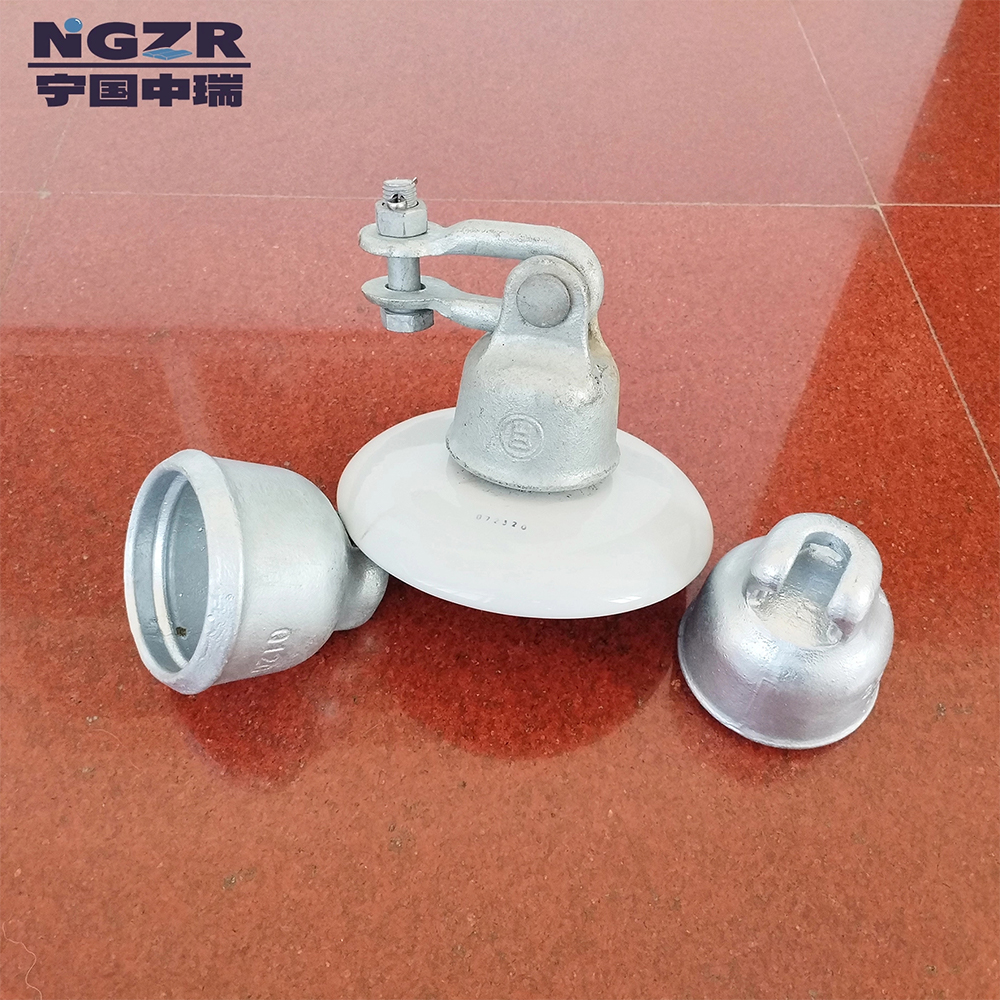








Anhui Ningguo Zhongrui Wear-Resistant Materials Co., Ltd. casts the steel cap that closes the head of a porcelain insulator and couples it to the next unit in the string. We produce this part as a Steel Casting Parts item from customer drawings and standard coupling dimensions, with the same melting, moulding and heat-treatment control we apply to our wear-resistant and structural castings.
Steel Cap Casting at Zhongrui
Our foundry sits in Ningguo City, Anhui Province, China, the casting cluster known for wear-resistant products. We pour carbon steel, low-alloy steel, high-manganese steel and ductile iron in our own workshops, and the Casting Steel Cap for Porcelain Insulator manufacturer route is built around the cementing zone and the coupling interface rather than around tonnage alone. A cap is small next to a mill liner, but it carries the full mechanical failing load of the insulator into the line hardware, so the casting is treated as a load-path component.
- Two fully automatic iron-mould sand-coating lines and four robot shell-moulding machines for repeatable shell production.
- A fully automatic lost foam line and a white-mould cutting workshop for accurate patterns and smooth as-cast surfaces.
- Three VIP-1800 series melting furnaces with temperature-controlled melting, constant-temperature pouring and far-infrared temperature measurement.
- One fully automatic quenching plus reheat treatment line and two automatic flipping annealing furnaces.
- 60,000 t annual capacity across cast balls and castings, with ISO 9001, ISO 14001 and ISO 45001 management systems in place.
What the Cap Does in a Porcelain Insulator
In a cap-and-pin insulator the steel cap is cemented over the head of the porcelain body. The ball or socket at the top of the cap couples to the adjacent unit, and the tensile load of the string passes through the cap wall, the cement layer and into the porcelain. The geometry of the cementing bore, the wall section and the coupling therefore decide whether the assembled insulator reaches its rated failing load without slip, cracking or corrosion-driven loosening.
- Load transfer: the dome, wall section and coupling must carry string tension together with the bending and torsion imposed by conductor movement.
- Cement joint: internal bore diameter, depth, concentricity and surface condition govern the cement thickness around the porcelain head.
- Corrosion duty: exposed overhead-line caps are normally specified with hot-dip galvanizing; coating mass and adhesion belong to the finished-part inspection record.
- Assembly fit: coupling surfaces must mate with the ball, socket and locking device without burrs, flash or cold shuts that could block insertion.
Cap Configurations and Coupling Interfaces
We work from the insulator type and the coupling standard rather than from a single catalogue shape. A disc cap with a ball seat, a disc cap with a socket, a pin-type cap, a flanged post cap and a project-specific cap all differ in how the load enters the metal and how the porcelain head is cemented. The table below shows how we match the casting to the interface.
| Cap configuration | Coupling / interface | Insulator body | Material we cast | Dimensional focus |
|---|---|---|---|---|
| Disc cap, ball type | Ball seat with locking clip | Toughened porcelain disc | Carbon steel or low-alloy steel | Ball radius, cap height, cementing bore, clip groove |
| Disc cap, socket type | Socket with W-clip or R-clip | Toughened porcelain disc | Carbon steel, ductile iron | Socket depth, throat diameter, groove position |
| Pin-type cap | Threaded or cemented pin interface | Pin insulator body | Ductile iron, malleable iron | Thread form, concentricity, wall thickness |
| Flanged post cap | Drilled flange, bolted connection | Line post or station post porcelain | Cast steel, ductile iron | Flange flatness, bolt pitch, joint depth |
| Custom cap per drawing | Defined by customer drawing | Project-specific porcelain or glass | Grade confirmed against load and finish | Casting stock, machining allowance, galvanizing |
Materials and Casting Process Route
The cap grade is fixed at drawing review against the required mechanical failing load, the coupling standard and the corrosion-protection system. Once the grade is set, the melting and moulding route follows our standard foundry flow.
- Melting: an IGBT module series-connected electric furnace brings the charge to temperature under controlled conditions.
- Chemical control: pre-melt and post-melt analysis on a cabinet-type PRO spectrometer covers over a dozen elements, with a carbon-sulphur analyzer for carbon control; deviations are adjusted before pouring.
- Pouring: far-infrared measurement of molten steel temperature supports constant-temperature pouring and reduces cold shuts and misruns.
- Moulding: lost foam vacuum casting gives smooth as-cast surfaces for coupling features, while resin sand and iron-mould sand coating lines suit repeatable batch work.
- Heat treatment: the automatic quenching and reheat treatment line and the annealing furnaces control structure and relieve casting stress.
- Machining: cementing bores and coupling surfaces can be machined to the drawing; machining allowance is included in the casting stock.
Critical Specifications We Cast To
Cap drawings usually combine a national or IEC dimensional standard with the insulator maker's own cementing profile. We read both and confirm the casting scope before pattern release.
- Coupling geometry: ball diameter, socket throat, locking groove and coupling gauges for IEC or national ball-and-socket systems.
- Cementing zone: bore diameter, depth, taper, concentricity and internal surface condition that set the cement layer thickness.
- Wall and dome section: sufficient section to carry the rated failing load without shrinkage porosity in the load path.
- Casting soundness: no cracks, slag inclusions, pores, sand holes, shrinkage cavities or cold shuts on load-bearing or sealing surfaces.
- Finish: hot-dip galvanizing to the coating mass named on the drawing, with the measurement method and acceptance criteria agreed at drawing review.
- Traceability: heat number, material grade and inspection results linked to the delivered batch.
Inspection, Acceptance and Quality Evidence
Inspection starts at the furnace rather than at the dispatch bay. Each batch of molten iron is analysed before and after melting, and the pouring temperature is measured so that the cast structure matches the grade that was ordered. After shakeout, every cap passes an initial visual inspection for surface defects before finishing.
- Spectrometer chemical analysis and carbon-sulphur results recorded per heat.
- Hardness testing on the specified location of the casting.
- Dimensional inspection of the cementing bore, cap height, coupling groove and flange features.
- Visual and, where the drawing requires it, additional non-destructive examination of the load path.
- ISO 9001 quality, ISO 14001 environmental and ISO 45001 occupational health and safety management systems, plus utility model patent certificates held by the company.
Mechanical failing load verification of the finished insulator is performed on the assembled unit by the insulator producer; our role is to deliver a cap casting that supports that test with consistent material and geometry.
Tooling, Machining and Installation Support
Patterns and moulds are prepared in our white-mould cutting and casting workshops, which lets us adjust the cementing bore or coupling stock without rebuilding the whole tool. For repeat orders we can hold the pattern, gauges and machining fixtures so that the second batch matches the first.
- Lost foam patterns for complex external profiles and clean coupling surfaces.
- Metal and resin-sand patterns for higher-volume cap production.
- Machining of bores, seats and flange faces where the drawing specifies a machined fit.
- Assembly guidance on cementing clearance, surface preparation and handling before the cap reaches the insulator line.
- Packing designed to protect coupling surfaces and galvanized coating during sea freight.
Information We Use to Configure Your Solution
A cap quotation is only as good as the interface data behind it. These are the inputs that change the casting, the tooling and the inspection plan, so they sit at the centre of our proposal preparation.
| Input we need | Why it changes the casting | Typical format |
|---|---|---|
| Cap drawing or 3D model | Defines external form, bore, wall section and machining allowance | PDF drawing with dimensions and tolerances |
| Insulator type and coupling standard | Sets ball or socket geometry and locking features | Standard reference plus catalogue or drawing |
| Mechanical failing load class | Sets material grade and minimum wall section | kN rating and test standard |
| Cementing profile | Controls bore diameter, depth and surface condition | Dimensioned section of the porcelain head and cap |
| Material grade and standard | Fixes melting, analysis and heat-treatment route | Grade name with standard or equivalent |
| Galvanizing specification | Determines surface preparation, coating mass and handling | Coating mass, standard and measurement method |
| Inspection and documentation requirement | Sets the test reports supplied with each batch | Chemical, hardness, dimensional and visual records |
| Quantity, packing and marking | Drives tooling choice, box design and delivery scope | Batch size, carton or pallet format, marking text |
Documentation, Packing and Delivery Scope
Standard delivery for a cap order includes the castings, the agreed inspection records and packing that protects machined bores and galvanized surfaces. We confirm the exact document set with the order so that receiving inspection can be completed without follow-up requests.
- Mill test certificate with chemical composition and hardness results.
- Dimensional inspection record for cementing and coupling features.
- Visual inspection record and, where specified, non-destructive examination report.
- Batch identification and heat-number traceability on the packing.
- Export packing suited to sea freight, with coupling surfaces separated and protected.
The same foundry also casts companion steel components, including the Toughened cast porcelain insulator steel cap for high-voltage electromagnetic insulators, so fittings that must work together can be produced under one material and inspection system.
Frequently Asked Questions
What material is used for a casting steel cap for a porcelain insulator?
We cast caps in carbon steel, low-alloy steel, high-manganese steel or ductile iron. The grade is confirmed against the required mechanical failing load, the coupling standard and the corrosion-protection system on the drawing. Chemical composition is checked by spectrometer before and after melting, so the delivered cap matches the grade that was ordered.
Can you cast caps to standard ball-and-socket coupling dimensions?
Yes. We work from the coupling standard named on the drawing, together with the insulator producer's cementing profile. Ball seat radius, socket throat, locking groove and coupling gauges can be held as cast features or machined, depending on the tolerance called for.
How do you control porosity in the load path of the cap?
Melting is temperature-controlled and pouring is carried out at measured temperature, which limits cold shuts and misruns. Lost foam vacuum casting and controlled shell moulding reduce gas and shrinkage defects, while every cap passes an initial visual inspection that rejects cracks, slag inclusions, pores, sand holes, shrinkage cavities and cold shuts before finishing.
Do you supply the cap only or the finished insulator?
We supply the cast steel cap and other steel casting parts. Cementing the cap onto the porcelain body and testing the assembled insulator are carried out by the insulator producer. When the drawing requires it, we machine the cementing bore and supply the dimensional record needed for that assembly step.
What information do you need to prepare a cap quotation?
Send the cap drawing or 3D model, the insulator type and coupling standard, the mechanical failing load class, the material grade, the cementing profile, the galvanizing specification, the batch quantity and the documentation and packing requirements. With those inputs we can confirm the casting route, the tooling position and the inspection plan.
Related Products and Categories
Our portfolio also includes Metallic Mould for Full Automatic Grinding Media Ball Casting Line for applications with different operating ranges, interfaces or integration requirements.



