


 English
  русский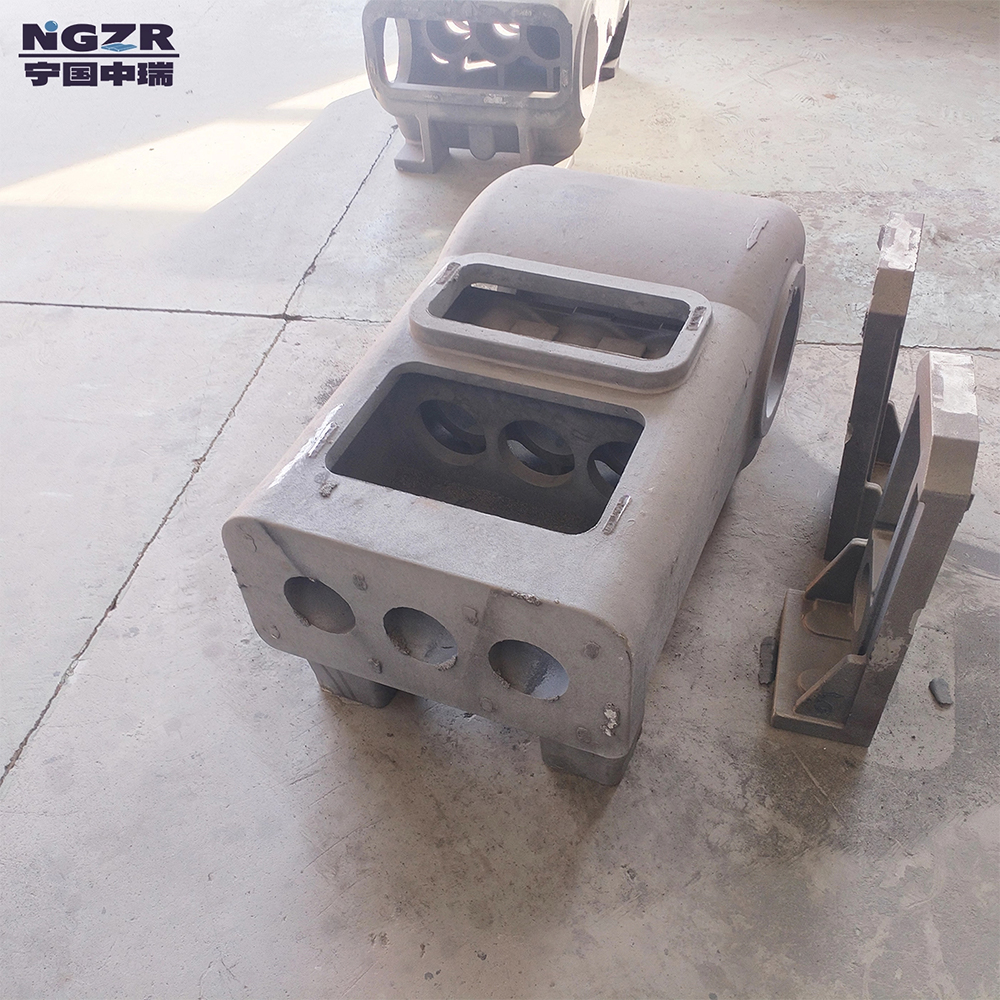








Steel Casting Parts Manufactured in Ningguo, Anhui
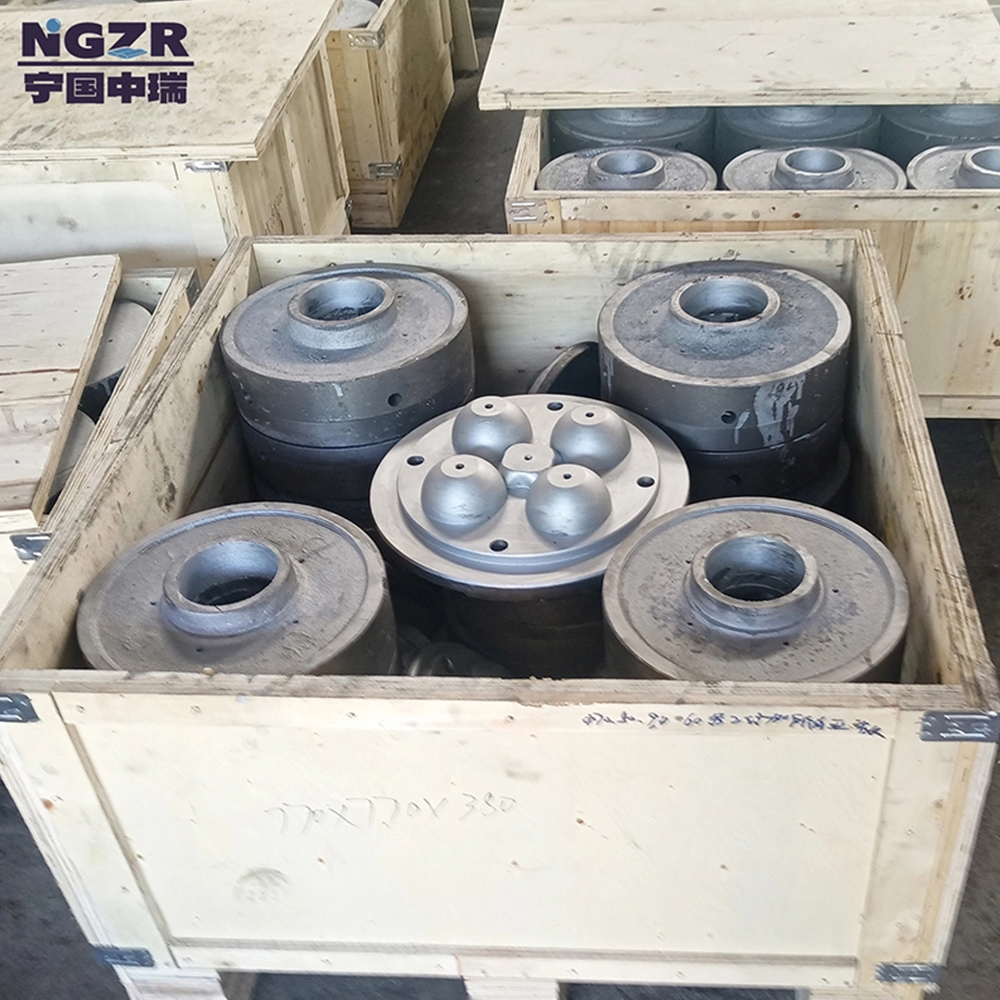
Anhui Ningguo Zhongrui Wear-Resistant Materials Co., Ltd. is a Steel Casting Parts manufacturer based in Ningguo City, Anhui Province, the foundry centre of China's wear-resistant casting industry. We melt carbon steel, alloy steel, high manganese steel, wear-resistant alloy steel and ductile iron, then pour them by sand casting, lost foam vacuum casting and iron-mould sand coating lines into structural and abrasion-resistant components for heavy machinery.
Every casting we ship does one of two jobs: it carries load, or it absorbs abrasion, and in many assemblies it does both. That is why the same quality system covers solar mounting brackets, porcelain insulator steel caps, crusher wear castings, mill liners and grinding media.
- Structural and load-bearing castings — brackets, pump and motor casings, machine bases, frames
- Impact and abrasion castings — chromium hammers, jaw plates, cone and impact liners
- Grinding circuit consumables — cast grinding balls, cylpebs, mill liners
- Transmission hardware — toughened porcelain insulator steel caps
Materials We Pour and the Processes Behind Them
Material selection drives service life more than any other single decision, so we treat the melt as an engineering step rather than a purchasing step. Metallurgy, section thickness, impact severity and the operating temperature of the component are matched before a pattern is cut.
Carbon steel, low-alloy and alloy steel, high manganese steel, wear-resistant alloy steel, high-chromium and medium-chromium cast iron, ductile iron.
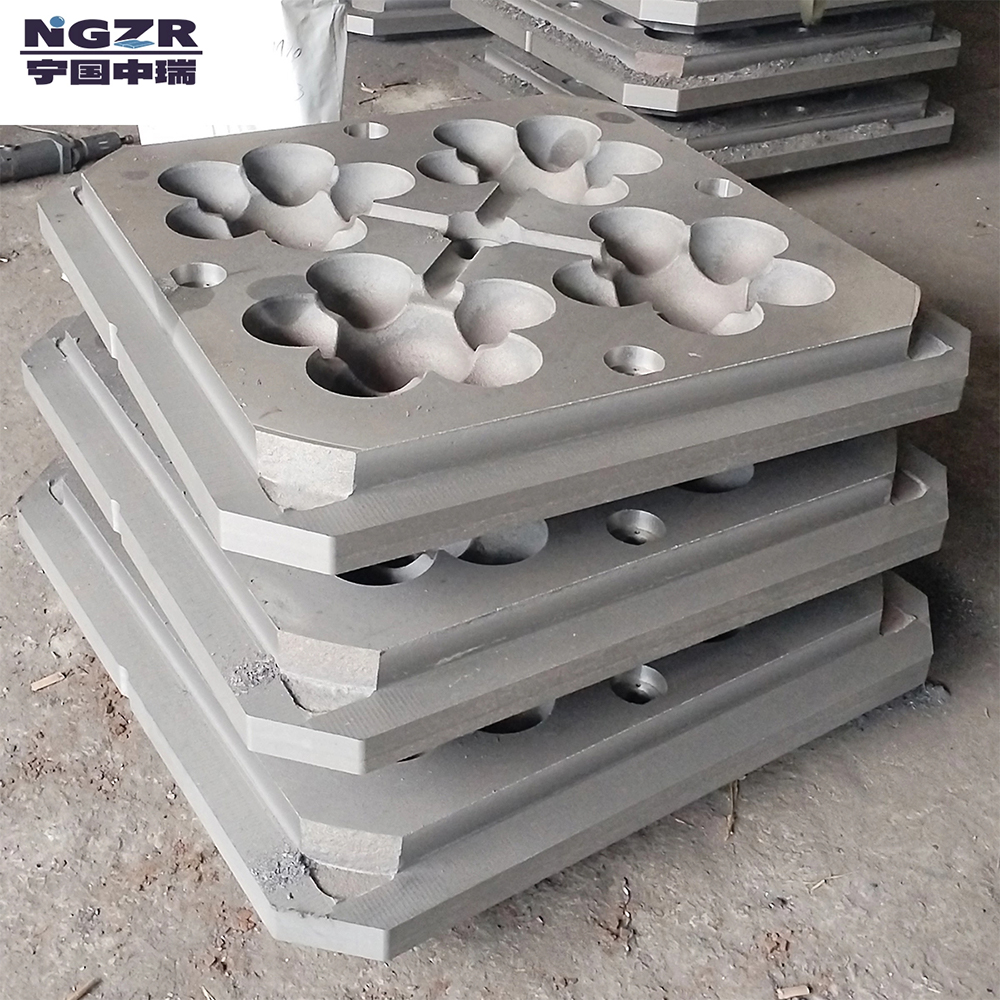
Lost foam vacuum precision casting, resin-sand shell moulding on mechanical arm machines, iron-mould sand coating lines, and manual resin-sand wooden mould casting for large single pieces.
Temperature-controlled melting and constant-temperature pouring, automatic temperature-controlled quenching with reheat, and automatic flipping annealing furnaces to stabilise structure and relieve stress.
Our Steel Casting Parts Range and Where Each Type Fits
| Product family | Where it fits | Typical material | Configuration focus |
|---|---|---|---|
| Casting Bracket for Solar Photovoltaic | Ground-mount and rooftop PV arrays, fixed-tilt and tracker structures | Ductile iron, carbon steel, alloy steel | Hole pattern, bearing faces, wind and snow load, coating |
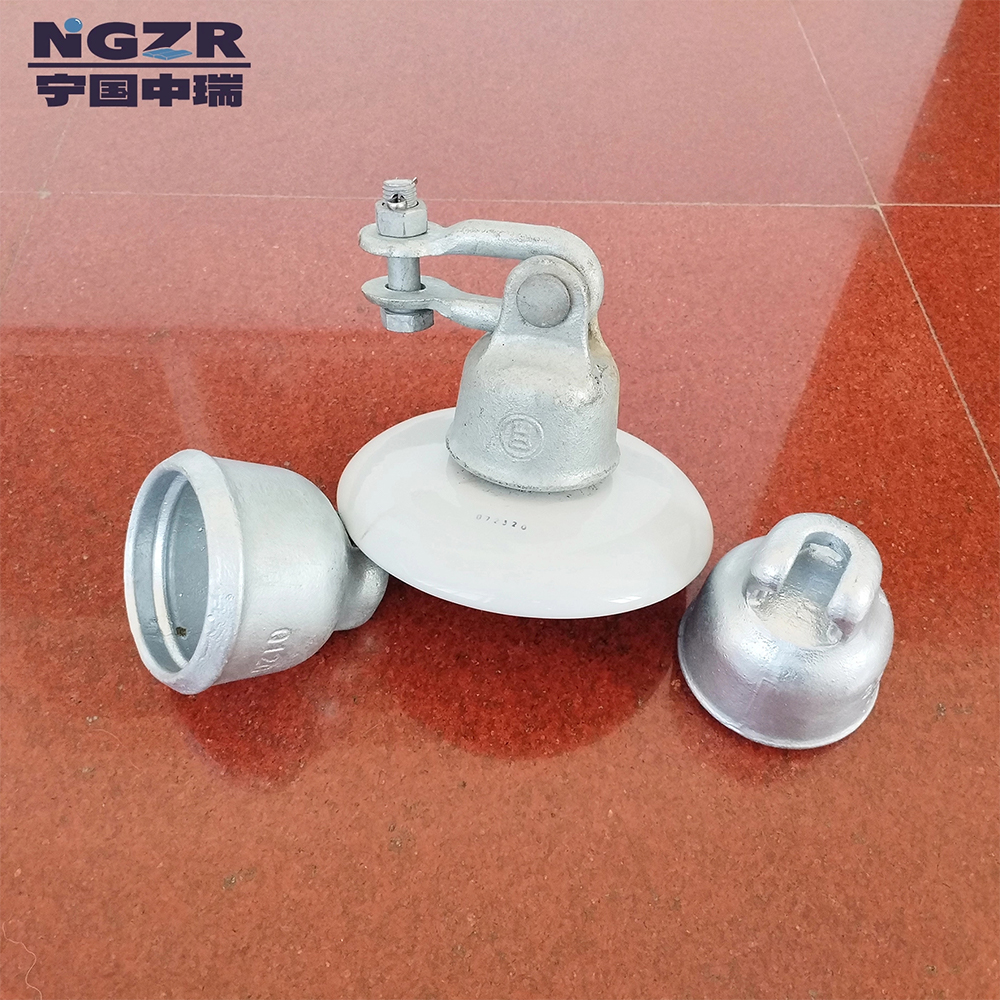
| Casting Steel Cap for Porcelain Insulator | High-voltage transmission and substation insulators | Cast steel, ductile iron | Concentricity, cement joint fit, mechanical load, galvanising |
| Crusher Wear Casting Parts | Jaw, cone, impact and hammer crushers | High manganese steel, high-chromium cast iron, bimetallic composite | Hardness versus toughness balance, mounting fit |
| Casting Grinding Media | Ball mills, SAG mills, tower mills in cement and mining circuits | High-chromium, medium-chromium and low-chromium alloy cast iron | Diameter, hardness, sphericity, breakage rate |
| Casting Mill Liner | Shell and end cover protection in horizontal and vertical mills | High-chromium cast iron, medium-chromium alloy steel, high manganese steel, rubber composite | Profile, bolt pattern, thickness, mill diameter |
| Casting Wear Parts for Mining Equipment | Spiral classifiers, excavator buckets and mineral processing lines | Wear-resistant alloy steel, high-chromium cast iron | Abrasion resistance, blade and tooth geometry, adapter fit |
Solar Photovoltaic Brackets: Load Path and Coating
Photovoltaic bracket castings work outdoors for decades under wind uplift, snow load and thermal cycling, so the design conversation centres on the load path through the casting rather than on the casting in isolation. Ductile iron grades give the elongation needed where brackets are bolted into thin-wall sections and torqued hard.
Before tooling, we confirm the interface data that decides whether a bracket assembles without field rework:
- Bolt circle, hole diameter and slot tolerance against the mating rail or pile
- Bearing face flatness and draft angles that keep contact area after coating
- Threaded features, if cast or tapped, and the minimum wall around them
- Hot-dip galvanising or other coating build-up, and whether holes need masking
- Wind and snow design load, and the resulting section thickness
Porcelain Insulator Steel Caps: Fit, Strength and Corrosion
A toughened cast porcelain insulator steel cap is a pressure-retaining part of the insulator string: it transfers the conductor load into the porcelain head through a cement joint. Casting soundness in the crown and skirt is therefore the first acceptance point, because porosity in these sections becomes a crack origin under tensile load.
We hold the cap geometry around the porcelain head and the mechanical interface in the same control loop:
- Internal head profile, cement gap and concentricity against the insulator drawing
- Dimensional and gauge checks on the coupling zone and the pin or fitting interface
- Mechanical load class of the finished insulator string and the corresponding cap section
- Galvanic protection — galvanising or zinc sleeve detail for line-side corrosion
- Batch traceability so a mechanical routine test can be tied back to the melt
Casting Capacity, Size Envelope and Machining Scope
Our two foundry formats cover both heavy single pieces and high-volume repeat castings. The larger envelope accommodates parts up to approximately 5,000 × 5,000 × 1,000 mm at up to 1,500 kg per piece; a compact heavy-section format handles parts up to about 1,500 × 1,500 × 1,200 mm at up to 3,000 kg per piece. Cored passages, ribs and mounting pads are produced in the mould rather than added by welding.
| Item | Scope we work to |
|---|---|
| Annual casting capacity | 60,000 tons of cast balls and castings |
| Grinding media sizes | Ф8 mm to Ф150 mm; large cast balls 40–150 mm, small balls and cylpebs 6–40 mm |
| Melting and pouring | 3 × VIP-1800 series melting furnaces, temperature-controlled melting, constant-temperature pouring |
| Moulding lines | 2 automatic iron-mould sand coating lines, 4 mechanical arm shell moulding machines, 1 automatic lost foam line |
| Finishing | Gate and riser removal, shot cleaning, as-cast or machined interfaces as specified on the drawing |
Quality Control from Melt to Final Inspection
Chemical control starts before pouring. A cabinet-type PRO spectrometer reads more than a dozen elements within a minute, a carbon-sulfur analyzer confirms carbon and sulphur, and both pre-melt and post-melt analyses are recorded. If a heat drifts outside specification, we adjust before the pour instead of sorting afterwards.
Initial visual inspection rejects cracks, slag inclusions, gas pores, sand holes, shrinkage cavities and cold shuts before parts are polished and released. Our management system is certified to ISO9001, ISO14001 and ISO45001, we hold Safety Production Standardization recognition, and several process improvements are protected by utility model patents.
Information We Use to Configure Your Solution
Our proposal is built around the working point, the material and the production target, not around a catalogue number. The following inputs let us fix material grade, moulding route, heat treatment cycle and inspection plan in one pass.
- Component drawing or 3D model with tolerances, datums and critical dimensions
- Material grade, or the service condition — impact, abrasion, temperature, corrosive exposure
- Finished piece weight and maximum section thickness
- Machining allowance, as-cast surfaces and any tapped or bored features
- Surface protection: galvanising, painting, or bare as-cast finish
- Quantity per order, batch pattern and the repeat schedule
- Pattern and tooling status — existing pattern available, or new tooling required
- Acceptance criteria and the inspection documents needed at delivery
- Packing method, delivery scope and destination handling conditions
Installation Support, Spares and Documentation
Because most of our steel castings are replacement or line-build components, they are configured to the mating equipment rather than to a generic size. Bolt patterns, keyways, spigots and locating faces are cast and, where required, machined to the drawing so the part drops into the existing assembly during a planned shutdown.
Deliveries are accompanied by the documents agreed at order confirmation — typically material and heat records, hardness results and dimensional reports. Drawing numbers, heat numbers and batch references are kept consistent from pattern to packing so repeat orders and spare-part supply stay interchangeable with the installed set.
Steel Casting Parts: Frequently Asked Questions
Which materials does Zhongrui pour for steel casting parts?
We melt carbon steel, low-alloy and alloy steel, high manganese steel and wear-resistant alloy steel, together with high-chromium, medium-chromium and low-chromium alloy cast iron and ductile iron. Grade selection follows the wear mechanism and load case of the component, and each heat is verified by spectrometer and carbon-sulfur analysis before pouring.
What is the largest single casting you can produce?
Our casting envelope covers pieces up to roughly 5,000 × 5,000 × 1,000 mm at up to 1,500 kg each, and a compact heavy-section format up to about 1,500 × 1,500 × 1,200 mm at up to 3,000 kg each. Annual capacity is 60,000 tons of cast balls and castings, so both one-off heavy parts and repeat production runs are supported.
How do you confirm hardness and internal soundness?
Melting is temperature-controlled, pouring is held at constant temperature and verified with a far-infrared measuring instrument, and quenching and annealing run automatically under temperature control. Hardness testing, a physical property testing room and initial visual inspection for cracks, shrinkage, slag and porosity complete the release sequence for each batch.
Can you supply castings to our drawing, including machining and coating?
Yes. We manufacture to customer drawings and samples, cast the required cored features, machine critical interfaces where specified, and apply the surface protection agreed at order. New tooling and existing customer patterns are both accommodated — send the drawing, material, quantity and finish requirement and we will confirm the configuration.
Which certifications apply to your castings?
Our operations are certified to ISO9001 quality management, ISO14001 environmental management and ISO45001 occupational health and safety management, with Safety Production Standardization recognition. Several developments in casting and heat treatment are covered by utility model patents.
How quickly will I receive a technical reply?
Inquiries are handled on working days, with a reply normally within 12 hours of receipt. Include the component drawing, material grade or service condition, order quantity and acceptance requirements so the first response can address material, moulding route and inspection plan directly.



