


 English
  русский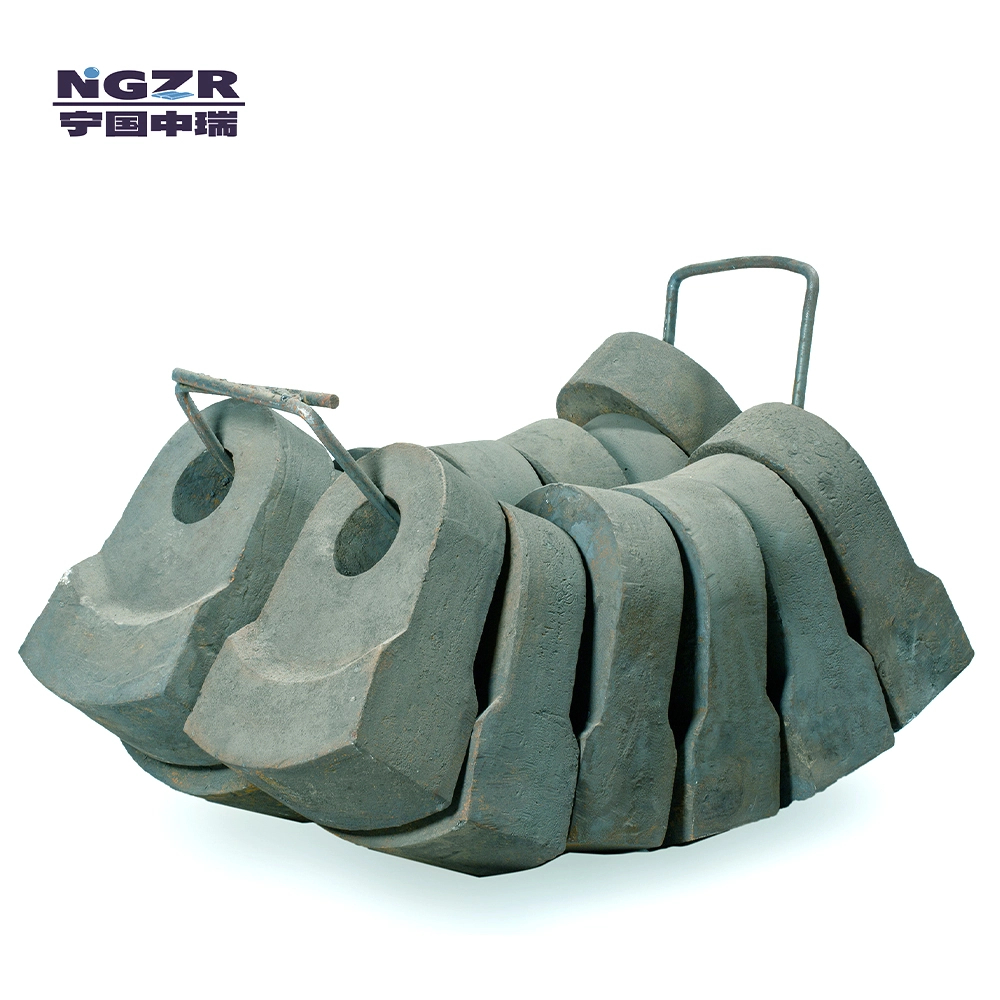








Anhui Ningguo Zhongrui Wear-Resistant Materials Co., Ltd. casts chromium alloy hammers for impact crushing in Ningguo City, Anhui Province, China, the established base of the country's wear-resistant casting industry. Our hammer range covers hammer heads, blow bars (plate hammers), impact liners and sieve plates poured from high-chromium, medium-chromium and low-chromium alloy iron, high manganese steel and bimetallic composites. Castings are formed on our lost foam and shell moulding lines and heat treated on a closed automatic quenching and re-tempering line. With 60,000 tons of annual casting capacity, we supply cement, aggregate, coal-fired power, mining and chemical plants where the rotor hammer is the fastest-wearing part of the machine.
Where We Sit in the Chromium Hammer Supply Chain
We are a foundry, not a trading house. Melting, moulding, heat treatment, machining, inspection and packing all happen inside our own workshops, which include a casting ball workshop, casting workshop, white mould cutting workshop, heat treatment workshop, raw material workshop, finished product workshop and a physical property testing room. As a Casting Chromium Hammer manufacturer, we work from the customer's crusher data, worn sample or drawing rather than from a fixed catalogue, so a replacement hammer matches the rotor it bolts onto.
The chromium hammer sits inside our wider Crusher Wear Casting Parts family, which also includes jaw plates and crusher liners. Sharing the same melting, spectrometer analysis and heat treatment discipline across the family keeps wear behaviour consistent when a plant replaces a full crushing chamber set.
Our Casting Chromium Hammer Range
Alloy Steel Cast Hammer Crusher Wear Parts: Hammer Head, Impact Liner & Sieve Plate
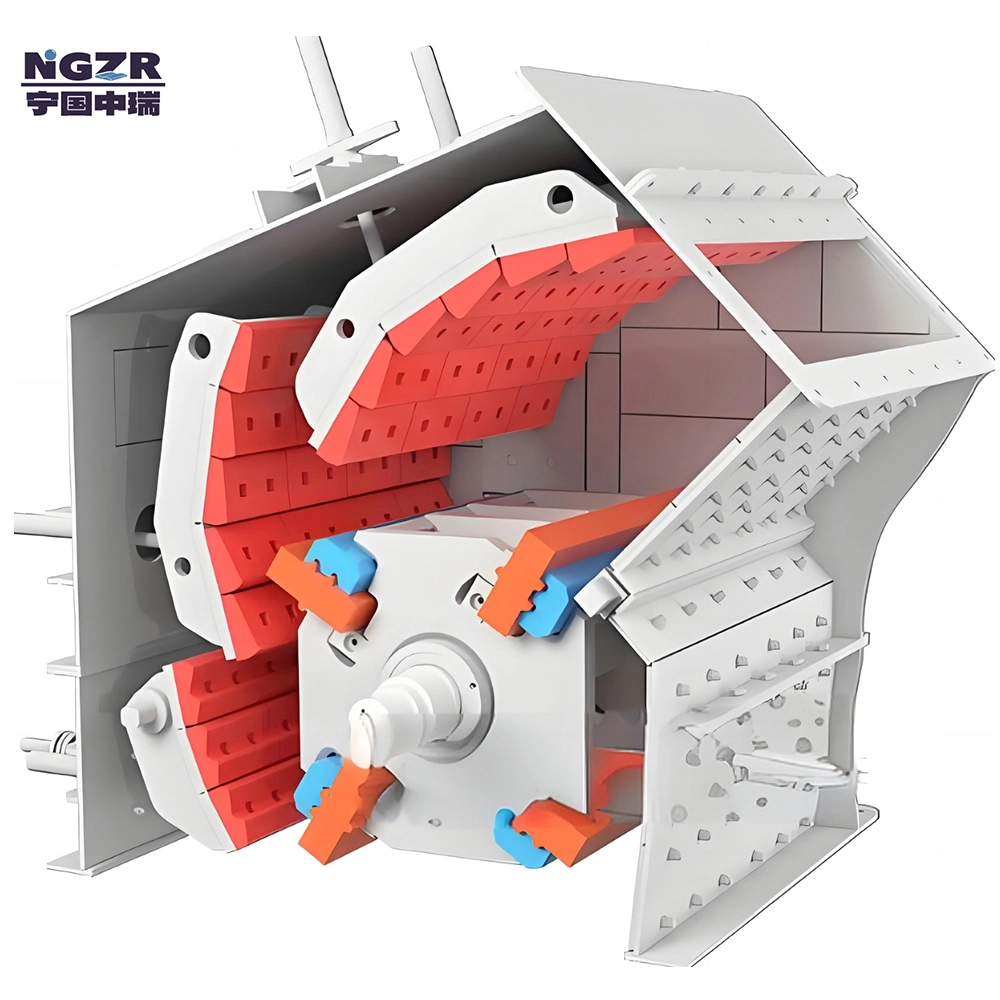
A matched three-part set for hammer crushers and hammer mills. The alloy steel cast hammer head set pairs the rotating hammer with the chamber impact liner and the discharge sieve plate, so wear across the crushing path advances at a similar rate instead of one part dictating the shutdown.
High Chromium-Manganese Alloy Cast Blow Bar (Plate Hammer) for Impact Crusher
The high chromium-manganese alloy cast blow bar targets horizontal-shaft impact crushers handling limestone, concrete and asphalt rubble. Chromium-manganese alloy balances abrasive wear resistance with the impact toughness a high-speed rotor demands, and the profile can be cast symmetrically so the bar is turned and re-used before replacement.
Range and Application Matching
| Component | Position in the machine | Typical duty | Material route | Configurable features |
|---|---|---|---|---|
| Hammer head | Rotor of hammer crusher or hammer mill | Limestone, clinker, gypsum, coal | High-chromium cast iron; alloy steel; bimetallic composite | Weight, hole pattern, pin diameter, single or double-end profile |
| Blow bar (plate hammer) | Rotor of horizontal-shaft impact crusher | High-speed primary and secondary impact | High chromium-manganese alloy cast | Length, width, thickness, bolt slots, symmetric turning profile |
| Impact liner | Crushing chamber walls and curtains | Secondary impact and rebound zone | High-chromium cast iron; high manganese steel | Plate thickness, rib pattern, bolt positions |
| Sieve plate | Discharge grate of hammer mill | Product sizing control | Wear-resistant alloy steel | Slot opening, plate thickness, fixing method |
Material Selection and Wear Behaviour
Hammer life is decided less by hardness alone and more by whether the alloy matches the breakage mode in the chamber. We select the material route from the feed material, the rotor speed and the impact angle, then confirm composition before pouring.
- High-chromium cast iron — best where abrasion dominates and the feed is fine to medium, giving a hard carbide structure that resists sliding wear.
- High manganese steel — chosen where large lumps produce heavy gouging impact and the surface needs to work-harden instead of chipping.
- Chromium-manganese alloy — a middle route for impact crushers, holding edge geometry under repeated high-speed strikes.
- Bimetallic composite casting — a wear-resistant working face combined with a tougher backing where a hammer must survive both abrasion and shock.
Melting, Pouring and Heat Treatment Control
Our melting shop runs three VIP-1800 series furnaces with temperature-controlled melting, followed by far-infrared temperature measurement and constant-temperature pouring. Composition is not left to the end of the shift: a German-imported direct-reading spectrometer checks more than a dozen elements within about one minute, and both pre-melt and post-melt analyses are taken so any deviation is corrected before the heat is poured.
- Moulding: 2 fully automatic iron mould sand-coating lines, 4 robotic shell moulding machines and 1 fully automatic lost foam mould line.
- Heat treatment: 1 fully automatic quenching plus re-tempering line and 2 automatic tilting annealing furnaces.
- Verification: cabinet-type spectrometer, carbon-sulfur analyser, hardness tester and far-infrared thermometer.
- Finishing: visual inspection for cracks, slag inclusion, porosity, sand holes, shrinkage cavities and cold shuts, followed by grinding and polishing.
Dimensional Scope and Machining
Our moulding lines accept large single-piece castings up to a 5000 × 5000 × 1000 mm envelope with individual piece weights up to 1500 kg, which covers most hammer crusher rotors and impact chamber liners. Mounting holes, bolt slots and mating faces are machined after heat treatment so that the fit on the rotor is defined by metal, not by hand dressing.
For rotor sets we keep hammer weights grouped within a tight band so the rotor stays balanced when the full circle is replaced. Where a plant runs more than one crusher model, we hold the pattern and can repeat the same geometry across subsequent orders.
Information We Use to Configure Your Solution
A chromium hammer quotation is only as good as the input data behind it. We build the proposal around the following project information, and we can work from a worn hammer, a drawing, or a dimensional sketch if no drawing exists.
- Crusher make, model and rotor diameter, plus the number of hammer positions per row.
- Mounting method — bolt hole pattern, pin diameter, wedge or clamp arrangement.
- Feed material, maximum lump size, moisture and abrasiveness, with throughput in t/h.
- Target product size and discharge grate or sieve opening.
- Drive power, rotor speed and expected service interval in operating hours.
- Working environment, including temperature and any corrosive or sticky material.
- Order structure — trial set, full rotor set, spare set or annual consumption planning.
- Packing, marking and delivery destination requirements.
Installation, Commissioning and Serviceability
Because hammer weight and geometry affect rotor dynamics, installation discipline matters as much as casting quality. We recommend checking that all hammers in a row are matched in weight, that fasteners are torqued to the crusher maker's figure, and that hammer-to-grate clearance is set before the machine is run in. The first hours of operation should be monitored for unusual vibration or bolt relaxation.
- Replace hammers in complete sets or balanced rows rather than individually.
- Record wear depth at fixed intervals to predict the next shutdown.
- Store spare hammers dry and off the ground to protect machined faces.
Quality Assurance and Order Documentation
Our management system holds ISO9001 quality certification, ISO14001 environmental certification and ISO45001 occupational health and safety certification, along with Safety Production Standardization certification and several utility model patents covering casting and moulding technology. Quality control on a chromium hammer order follows the same path as the rest of our wear castings: pre-melt and post-melt spectrometry, controlled pouring temperature, controlled quenching and annealing, hardness verification, and dimensional and visual inspection before packing.
Export packing, marking and the document set required for a shipment are confirmed at the order stage so that receiving inspection at the plant matches what left our finished goods workshop.
Frequently Asked Questions
Which hammer materials can you cast?
We pour high-chromium, medium-chromium and low-chromium alloy iron, high manganese steel, wear-resistant alloy steel and bimetallic composite castings. The alloy is chosen from the breakage mode in your chamber — abrasion-dominant duty usually points to high-chromium iron, while heavy lump impact points to manganese or chromium-manganese grades.
How do you match a replacement hammer to our crusher?
Send the crusher model, rotor diameter, hammer position count and mounting detail, or simply a worn hammer as a sample. We take the mounting geometry and weight from that reference and cast the wear profile around it, so the replacement bolts onto the existing rotor without modification.
What is the largest single piece you can produce?
Our foundry can handle castings up to a 5000 × 5000 × 1000 mm envelope with individual piece weights up to 1500 kg. Cast grinding media run from Ф8 mm to Ф150 mm, so the same plant can supply both the crushing hammers and the grinding charge for a mineral processing line.
How is a chromium hammer inspected before shipment?
Chemical composition is verified by direct-reading spectrometer before and after melting, pouring temperature is monitored by far-infrared measurement, and heat treatment runs on a controlled quenching and re-tempering cycle. Finished pieces are inspected for surface cracks, slag inclusions, porosity, sand holes, shrinkage cavities and cold shuts, then ground and polished before packing.
Do you supply impact liners and sieve plates with the hammers?
Yes. The hammer head, chamber impact liner and discharge sieve plate are cast as a matched set so wear across the crushing path stays balanced. Supplying the full set from one foundry also means the clearance between rotating and fixed parts is defined from the original drawing rather than from mixed aftermarket parts.
What information do you need to prepare a proposal?
A quotation is built from the crusher model, mounting dimensions, feed material and lump size, required throughput, target product size, rotor speed and expected service interval. Where a drawing is unavailable we accept a sample hammer or a dimensional sketch, and we confirm the delivery destination and packing requirements before issuing the final quotation.



