


 English
  русский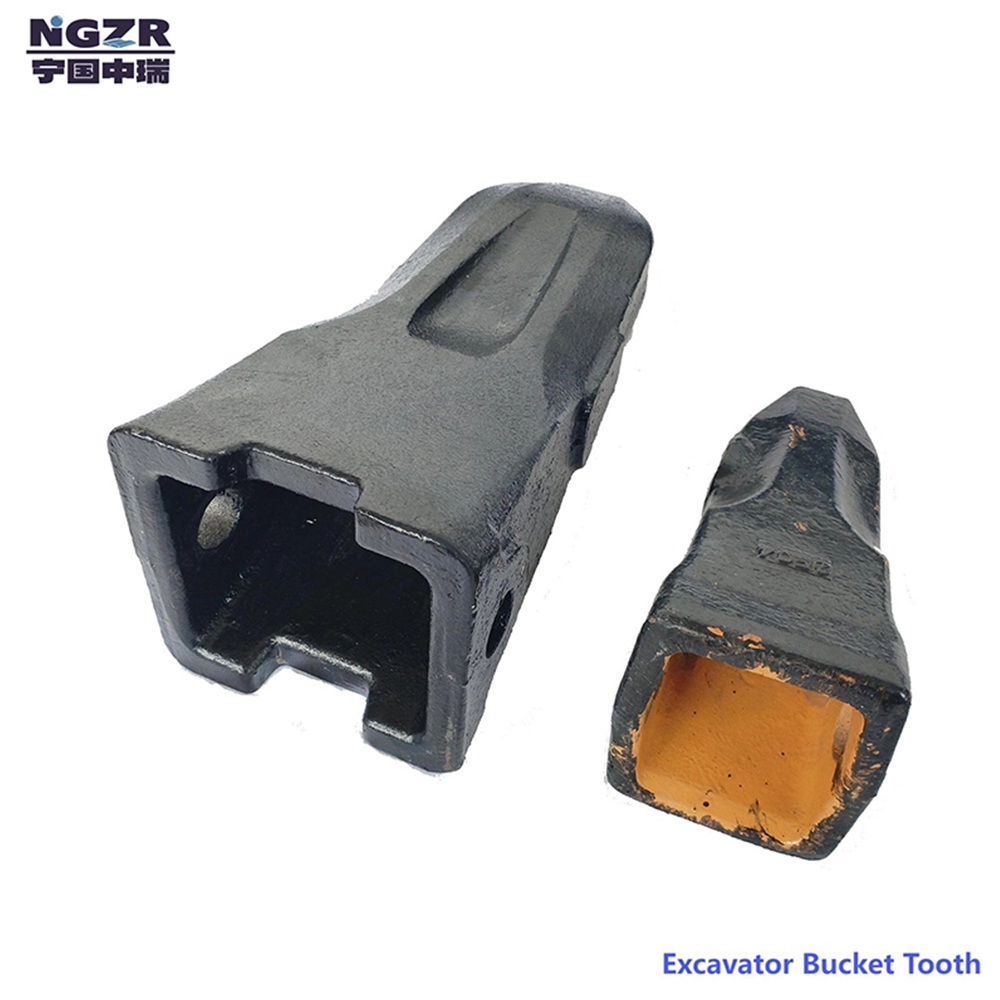








Anhui Ningguo Zhongrui Wear-Resistant Materials Co., Ltd. is a Casting Classifier Wear Parts manufacturer working from Ningguo City, Anhui Province, inside China's wear-resistant casting cluster. We pour the replaceable surfaces that take the abrasion in gravity separation circuits: cast alloy classifier blades, trough and sand-return liners, hub and arm castings, end plates and bolt-on wear segments for spiral and screw classifiers.
Parts are produced to the customer's drawing and alloy call-out, heat treated on our own lines, inspected before dispatch and packed for direct installation. Annual cast ball and casting output reaches 60,000 tons, so single-piece replacements and recurring plant programmes run through the same foundry, patterns and quality records.
Our Casting Classifier Wear Parts Range
This group sits inside our wider Casting Wear Parts for Mining Equipment family. It covers the classifier contact surfaces plus the cast digging tools that feed the same plant.
- Cast alloy classifier blades — helical flights that lift settled sand back to the mill, cast with a thickened leading edge and a hub or arm interface matched to the existing spiral assembly.
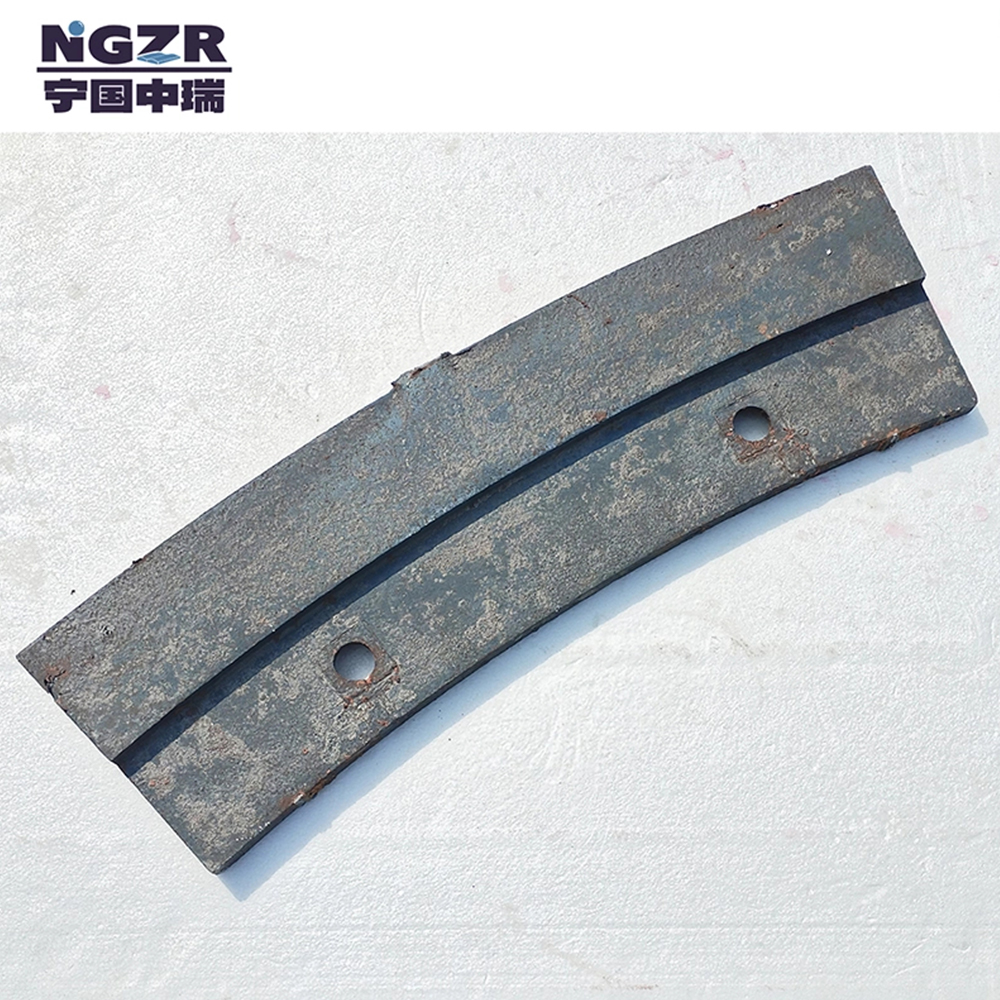
- Trough, side and sand-return liners — flat, curved and profiled plates protecting the trough bottom and walls beneath the sand bed.
- Hub, arm and end-plate castings — structural members that carry the spiral load; cast in steel or ductile iron and supplied with machined bores and bolt circles where required.
- Bolt-on wear segments and replaceable tips — partial sections that extend service life without removing the full spiral assembly.
- High abrasion-resistant alloy steel cast excavator bucket teeth and adapters — digging wear parts for shovel and loader fleets on the same site.
- Circuit companion castings — crusher wear castings and mill liners for the crushing and grinding stages either side of the classifier.
Where These Parts Operate
A spiral classifier separates fines in the overflow from coarse sand returned to the mill. Slurry is fed into a sloping trough, the slowly rotating spiral rakes the settled bed up the incline, and the fines pass over the weir. The wear surfaces are therefore working continuously against a moving bed of abrasive solids.
Abrasion is mixed rather than uniform: sliding abrasion from the sand bed under the flight, scratching from hard minerals such as quartz, impact from oversize lumps, and corrosion from process water. That combination, not hardness alone, drives which alloy we cast for a given position.
Alloy Selection and Wear-Mechanism Matching
We cast from high-chromium cast iron, medium-chromium alloy steel, high manganese steel, bimetallic composite material, carbon steel and ductile iron. The table below shows how the part position, the dominant wear mode and the data we match against one another.
| Part group | Dominant duty | Casting route | Alloy options | Data we match to |
|---|---|---|---|---|
| Classifier blades, helical flights | Continuous sliding abrasion in the sand bed, moderate impact | Lost foam vacuum precision casting, resin sand | High-chromium cast iron, medium-chromium alloy steel, bimetallic composite | Spiral diameter, blade pitch and lead, wear-face thickness, hub and bolt interface |
| Trough, side and sand-return liners | Sliding abrasion, slurry corrosion, edge loading | Resin sand moulding, iron mould sand coating for standard plates | High-chromium cast iron, high manganese steel | Trough profile and curvature, plate thickness, hole pattern, segmentation |
| Hub, arm and end-plate castings | Structural load, fatigue, occasional overload | Resin sand, lost foam | Carbon steel, low-alloy steel, ductile iron | Bore and keyway, bolt circle, machined faces, weight and lifting points |
| Bucket teeth and adapters | High-impact digging, gouging abrasion | Lost foam vacuum casting | High abrasion-resistant alloy steel, high manganese steel | Tooth profile, nose fit, pin and lock system, machine model |
| Crusher wear castings and mill liners on the same line | Impact, compression and sliding abrasion | Lost foam vacuum casting, resin sand | High-chromium cast iron, high manganese steel, Mn-Cr alloy steel | Crusher model and chamber, mill diameter, feed size, throughput |
Casting Capacity and Production Route
Classifier blades are awkward shapes: long, thin in section and required to stay straight through heat treatment. Our moulding and heat treatment lines were built around that kind of work.
- 3 sets of VIP-1800 series melting furnaces with IGBT module series-connected electric melting, giving temperature-controlled melting and constant-temperature pouring.
- 2 fully automatic iron mould sand coating production lines and 4 mechanical arm shell moulding machines for volume repeat parts.
- 1 fully automatic lost foam mould production line for complex blade and adapter geometry cast without draft restrictions.
- 1 fully automatic heat treatment quenching plus reheat treatment line and 2 automatic flipping annealing furnaces.
- Casting ball workshop, casting workshop, white mould cutting workshop, heat treatment workshop, raw material workshop, finished product workshop and a physical property testing room.
Our large-part lines handle mould envelopes up to 5,000 × 5,000 × 1,000 mm with individual castings to 1,500 kg, and heavy-section work to 1,500 × 1,500 × 1,200 mm at up to 3,000 kg. Small and medium castings fill the remaining range, and standard cast grinding media run from Ф8 mm to Ф150 mm.
Critical Specifications We Confirm Before Pouring
Each order is released against a confirmed data set rather than a description. The points below are what we lock down with the customer before pattern work starts.
- Alloy grade and chemistry target, including the elements controlled by spectrometer analysis.
- Spiral geometry: outer and inner diameter, blade pitch and lead, handedness of the flight.
- Wear-face thickness at the leading edge and the thickness step at the trailing edge.
- Hub bore, keyway, pitch circle diameter, hole diameter and hole pattern.
- Segmentation plan where the blade or liner must be split for installation access.
- Machining allowance and the faces that must arrive finished.
- Heat treatment condition and the hardness to be verified on the finished part.
- Unit weight, centre of gravity and lifting point position for safe handling.
- Order split between installed spares and first-fill quantities.
When drawings no longer exist, we work from a worn sample, a scanned profile or site measurements and rebuild the pattern accordingly.
Quality Control and Acceptance
Every heat is analysed before and after melting. A cabinet-type direct-reading spectrometer checks more than a dozen chemical elements within about one minute, supported by a carbon-sulfur analyser, and any deviation is corrected before pouring. Molten metal temperature is read by far-infrared instrument and poured at controlled temperature.
After shakeout, castings pass a visual initial inspection for smooth surface condition and are rejected for cracks, slag inclusions, pores, sand holes, shrinkage cavities or cold shuts. Passing parts are polished and, where specified, machined and checked dimensionally.
- Heat treatment is temperature-controlled through quenching and annealing, with batch records kept against the order.
- Hardness is verified with our hardness tester on finished castings.
- Documentation travels with the shipment: chemical composition, hardness results, dimensional check and heat treatment batch reference.
- Our management system holds ISO 9001, ISO 14001 and ISO 45001 certification, with Safety Production Standardization recognition and registered utility model patents.
Configuration and Customization
We are primarily a made-to-order foundry, so the classifier range is configured rather than selected from a fixed catalogue.
- Full blade, liner or adapter cast to drawing, or reverse engineered from a sample.
- Right-hand or left-hand flight, and matched sets where a spiral is being renewed in full.
- Bolt-on segments, weld-on wear faces or a hybrid where the hub is retained and only the flight is replaced.
- Local thickening at measured high-wear zones, using the customer's wear records as the input.
- Hole patterns reproduced to suit existing hubs, arms and troughs without on-site modification.
- Repeat supply from retained patterns, so replacement sets stay interchangeable with the first delivery.
Companion Wear Castings for the Same Circuit
Classifier wear rarely stops at the classifier. We cast Crusher Wear Casting Parts including chromium hammers, jaw plates and crusher liners for the reduction stage, and Casting Mill Liner for the ball, SAG and vertical mills that receive the returned sand. Ordering these together keeps alloy philosophy, heat treatment and delivery timing consistent across one plant.
Installation, Commissioning and Maintenance
Blades arrive drilled to the confirmed pattern, so installation is a fit-and-bolt operation against the hub or arm. Liners and plates seat against the trough surface with the hole pattern aligned to the existing fasteners.
- Check fastener torque shortly after the first running hours and retighten before the bed establishes.
- Inspect blade tips and leading edges at each shutdown for chipping or crack initiation.
- Measure wear-face thickness at marked positions rather than visually, and track it against tonnage treated.
- Replace segments before the hub or arm casting is exposed to the sand bed.
- Keep one spare set of the fastest-wearing segment on site to avoid unplanned downtime.
Spare parts are produced from the same retained patterns and heat treatment specification as the original supply, so a replacement set fits without reworking the assembly.
Information We Use to Configure Your Solution
A workable configuration and quotation comes from a small, specific set of inputs rather than a general description of the machine.
- Equipment: classifier make and model, spiral diameter and length, trough width and inclination, drive arrangement.
- Duty: feed rate in t/h, feed size, solids concentration, slurry pH and temperature, ore type and hardness.
- Wearing part: drawing number, worn sample photographs with a scale, measured thickness at the wear points, quantity per spiral.
- Interface: hub bore and keyway, pitch circle, hole diameter, handedness, any machining already present.
- Material and treatment: alloy grade, hardness expectation, heat treatment condition, whether bimetallic construction is preferred.
- Commercial scope: one-off or recurring supply, spares split, packing requirement and delivery destination.
With these inputs we return a configured part, the alloy recommendation behind it and a delivery scope covering both the immediate set and future replacements.
Frequently Asked Questions
What are casting classifier wear parts used for?
They are the replaceable cast surfaces inside spiral and screw classifiers: helical blades that rake settled sand back to the mill, trough and sand-return liners that protect the casing, and hub, arm and end-plate castings that carry the spiral assembly. The cast parts take the abrasion so the machine structure does not.
Which alloys do you cast classifier blades in?
High-chromium cast iron is our standard choice for continuous sliding abrasion in the sand bed, with medium-chromium alloy steel and bimetallic composite castings used where impact or bending load is present. Structural hub and arm parts are cast in carbon steel, low-alloy steel or ductile iron.
Can you produce blades from a worn sample instead of a drawing?
Yes. We work from a worn sample, a scanned profile or site measurements and rebuild the pattern, then confirm the critical dimensions and interface details with you before casting. The retained pattern is reused for every subsequent replacement order.
How is quality verified before shipment?
Pre-melt and post-melt spectrometer analysis, carbon-sulfur testing where relevant, far-infrared temperature control at pouring, controlled quenching and annealing, hardness verification, dimensional checking and a visual inspection that rejects cracks, pores, sand holes, shrinkage cavities and cold shuts. Records accompany the shipment.
Do you supply the crusher and mill wear castings as well?
We do. Chromium hammers, jaw plates, crusher liners, ball mill liners, SAG and vertical mill liners, grinding balls and grinding cylpebs are all cast in the same foundry, which lets a plant consolidate wear-part supply and keep alloy and heat treatment practice consistent across the circuit.
What lead information shortens the quotation stage?
Equipment model, spiral diameter and blade pitch, feed rate and ore type, the drawing or worn sample, the hub and bolt interface, alloy preference and the quantity split between first fill and spares. With those details, the pattern, alloy and delivery scope can be fixed without further clarification rounds.



