

 English
  русский
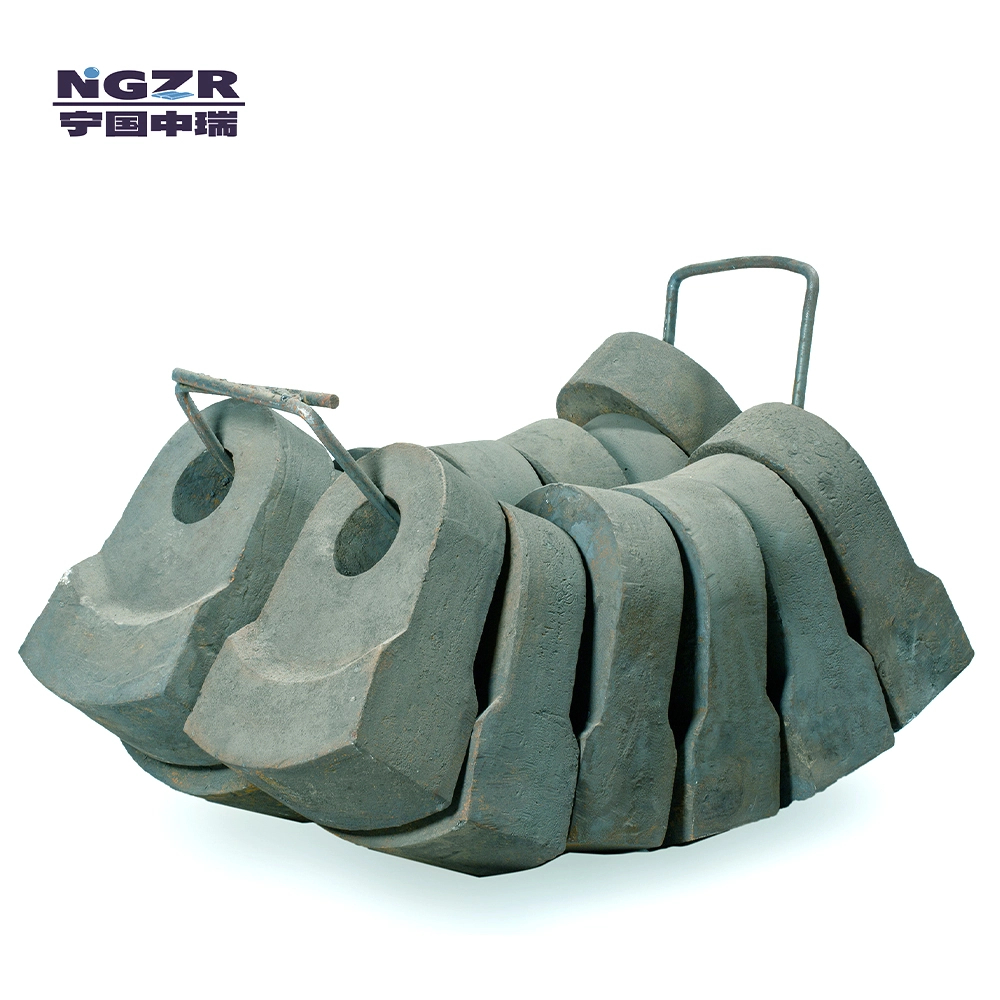
 Recently, the Zhongrui Wear-resistant Materials Co., Ltd. in Ningguo City, Anhui Province, completed a comprehensive technical upgrade for the Casting Ball Mill Liner series. Leveraging multi-gradient alloy formulations, dual-metallic casting processes, and an intelligent closed-loop heat treatment system, the new ball mill casting liners effectively address industry pain points such as rapid wear, easy fracture, poor fit, low grinding efficiency, and frequent downtime for maintenance in the mining, cement, power generation, solid waste resource utilization, and non-metallic mineral processing core application fields.
1. Directly address core pain points of ball mill equipment and tackle industry challenges
The ball mill liner is the core protective component of the ball mill cylinder and end cover. It not only isolates the direct impact and abrasion of grinding steel balls and mineral materials on the equipment shell but also optimizes the steel ball trajectory through the rib structure, directly determining the grinding capacity, output particle size, and overall machine lifespan.
Currently, the mainstream high-manganese single liner products have significant shortcomings: insufficient surface hardening in light wear conditions and rapid wear consumption; insufficient toughness in heavy-load and strong-impact scenarios, prone to cracking, chipping, and large-scale peeling; ordinary casting liner molds have poor precision and large gaps with the cylinder, causing severe vibration during operation, which not only damages core transmission components such as bearings and reducers but also requires long production line shutdowns, thereby increasing overall operational costs of consumables, labor, and energy consumption.
The technical team of Zhongrui Casting has been deeply engaged in wear-resistant casting for over a decade. They have iteratively tested in thousands of on-site conditions, from material formulations, casting processes, structural mechanical design, to heat treatment processes, to create a new generation of casting ball mill liners that offer ultra-high wear resistance and impact toughness, while maintaining high performance and cost-effectiveness.
2. Three core technological advantages, building product core competitiveness
1. Graded alloy material system, precise matching for all working conditions
The company offers three mainstream casting liner material series for different grinding loads, covering the vast majority of industrial grinding scenarios:
1. High-chromium cast iron liner
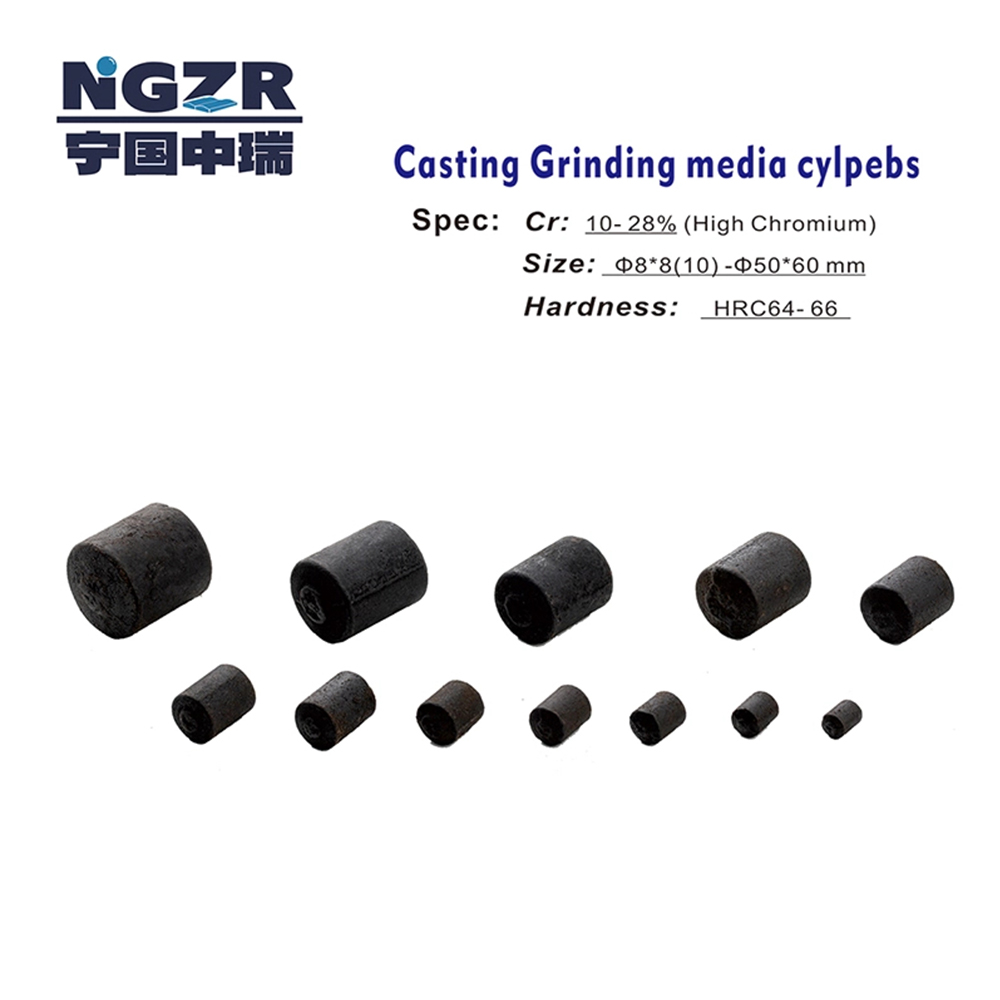
Using Cr15, Cr20, and Cr26 high-chromium wear-resistant cast iron substrates, precisely matching alloy strengthening elements such as molybdenum, vanadium, manganese, and rare earth, after quenching and reheat treatment, the working surface hardness can reach HRC 60–65, with a carbonitride dispersion in the metallographic structure, with an anti-grinding particle wear ability 2–4 times that of conventional high-manganese steel liners, suitable for high-load continuous grinding in iron ore, non-ferrous metal beneficiation, cement clinker, etc.; the heavy-load impact version adopts the **dual liquid dual-metallic casting process**, with a high-chromium wear-resistant layer on the working surface and a high-toughness alloy steel base, integrated metallurgical fusion, eliminating the risks of cracking, chipping, and large-scale peeling from the root cause.
2. High-manganese steel wear-resistant liner
Selecting Mn13Cr2 and Mn18Cr2 austenitic high-manganese steel materials, the surface layer quickly hardens after impact, with excellent impact toughness, targeting large-particle material coarse crushing and strong-impact semi-autogenous grinding machine operation scenarios, with outstanding cost-effectiveness.
3. Medium-chromium alloy steel liner
Balancing wear resistance and production cost, with stronger corrosion resistance, mostly used in power plant fly ash desulfurization, coal gangue grinding, construction waste solid waste treatment, etc., for medium wear conditions.
2. Precision casting + structural optimization, double improvement in installation compatibility and grinding efficiency
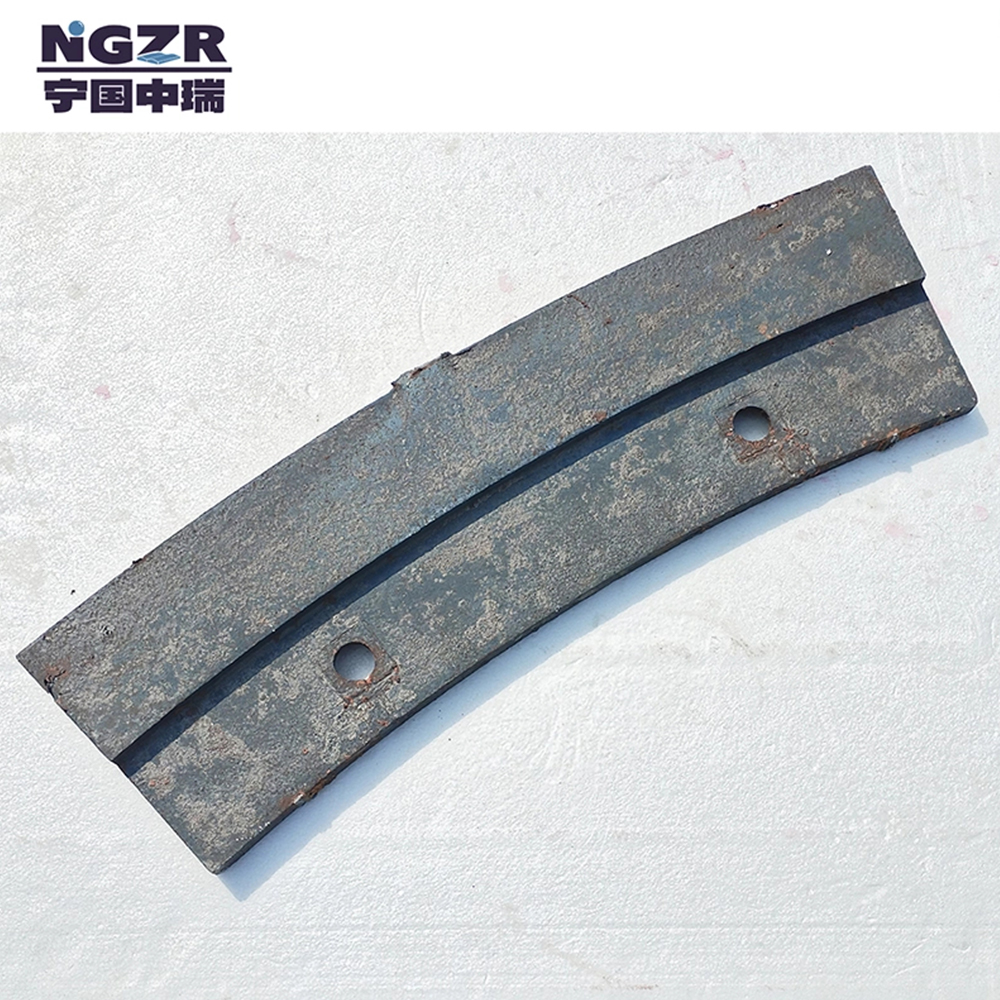
The product is formed using the vacuum precision casting process of the disappearing mold, with a dense internal structure, free from casting defects such as air holes, shrinkage cavities, and sand eyes; Based on three-dimensional modeling reverse mapping, it strictly matches the arc shape of various ball mill cylinders, the installation holes of the flanges are precise, the gap between the liner and the inner wall of the cylinder is extremely small, the running vibration amplitude is significantly reduced, and the service life of the entire transmission system of the mill is prolonged.
At the same time, according to customer requirements, custom wave-shaped liners, stepped liners, grading lifting strip liners, end cover liners, discharge篦 plates, etc. with various shapes can be provided. The height of steel ball lifting and the rolling path are optimized, the impact crushing and grinding effect of the materials is enhanced, the uniformity of powder discharge is improved, and the unit power consumption of the mill is reduced.
3. Strict quality inspection throughout the process, stable and controllable quality
Each batch of cast ball mill liners undergoes four factory inspections: material spectral composition analysis, Rockwell hardness sampling test, impact toughness mechanical test, and full inspection of appearance dimensions; for large-sized products, additional non-destructive testing for internal hidden defects is added. All products can be customized according to the customer's mill model, installation dimensions, and material conditions, and can be adapted to various domestic and imported ball mill equipment of different specifications.